Most people pick leather gloves by feel. They flex the fingers and buy the softest pair. On rough shop work, the softest glove is often the first one to wear through.
Cowhide, goatskin, and deerskin each trade softness for toughness in a different way. ClawSKINZ leather work gloves are cowhide, and this post explains when that is the right choice and when another leather fits better.
Cowhide: The Workhorse
Cowhide is the thickest and toughest of the three. It holds up to rough metal, crates, and hardware, and it costs the least.
The trade is feel. Cowhide is stiffer out of the box and takes time to break in.
The cut of the hide matters here. Top grain cowhide comes from the outer layer, with a tighter grain that is smoother, more supple, and more water resistant. Split cowhide comes from the lower layers, with a rougher surface and a lower cost, which suits heavy general handling.
Fully lined cowhide also works for cold weather. ClawSKINZ Top Grain Cowhide Fully Lined Work Gloves add a lining for winter yard and outdoor work.
Goatskin: Soft With Real Strength
Goatskin is thinner than cowhide and noticeably softer. The grain is tight, so the leather stays strong for its thickness. A goatskin glove can be thin and flexible and still resist tearing.
It costs more than cowhide. It fits work that needs fingertip control and still involves some abrasion, such as sorting small parts and handling hardware.
Deerskin: The Softest Option
Deerskin is the softest and most supple of the three. It stretches slightly with the hand and stays soft after it gets wet and dries.
It costs the most and wears faster under rough use. Deerskin fits light, precise work where comfort matters more than abrasion resistance.

How the Three Compare
Here is how the three rank on the points that matter in the shop:
Durability: cowhide first, goatskin second, deerskin third
Dexterity and feel: deerskin first, goatskin second, cowhide third
Cost: cowhide lowest, deerskin highest
Break in: cowhide takes the longest, deerskin is soft from the first wear
Where Cowhide Is Not the Answer
GROWL does not offer goatskin or deerskin gloves. If the job demands the softest possible feel for precision work, those leathers are the better pick.
Leather also absorbs oil and moisture. A soaked glove loses grip and dries stiff, so wet or oily jobs call for GrowlGRRRIP nitrile gloves. Cut hazards call for ClawGUARD. Welding and high heat call for ClawFORGE.
Match the Leather to the Job
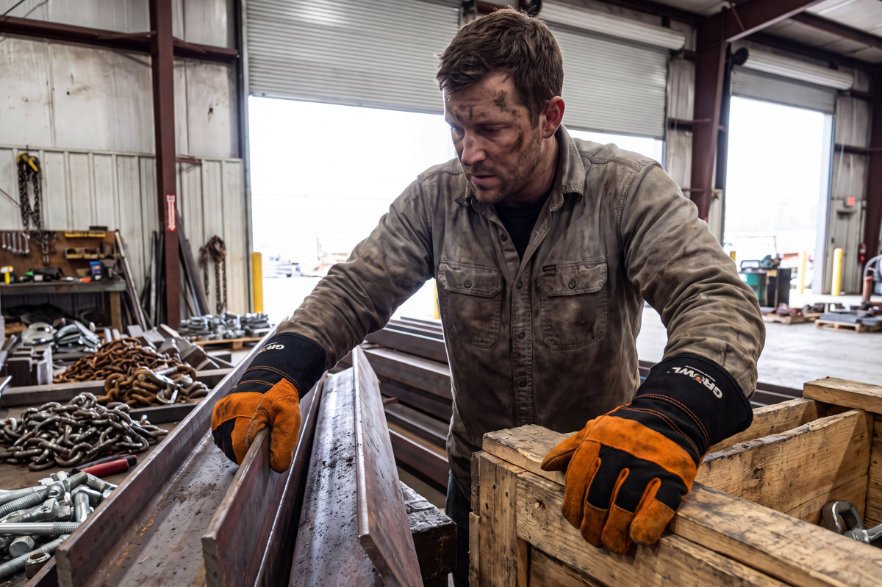
Choose cowhide when the work is rough, goatskin when you need control and some toughness, and deerskin when comfort comes first. For heavy loading, hauling, and parts handling, ClawSKINZ cowhide gloves cover the work. Most styles come in sizes M to XXL, packed 6 pairs to a pack and 72 pairs to a case.
Order ClawSKINZ through your parts supplier, or find the full lineup at growlproducts.com.