Why Automotive Mechanics Are Among the Most Chemically Exposed Workers in the Trades
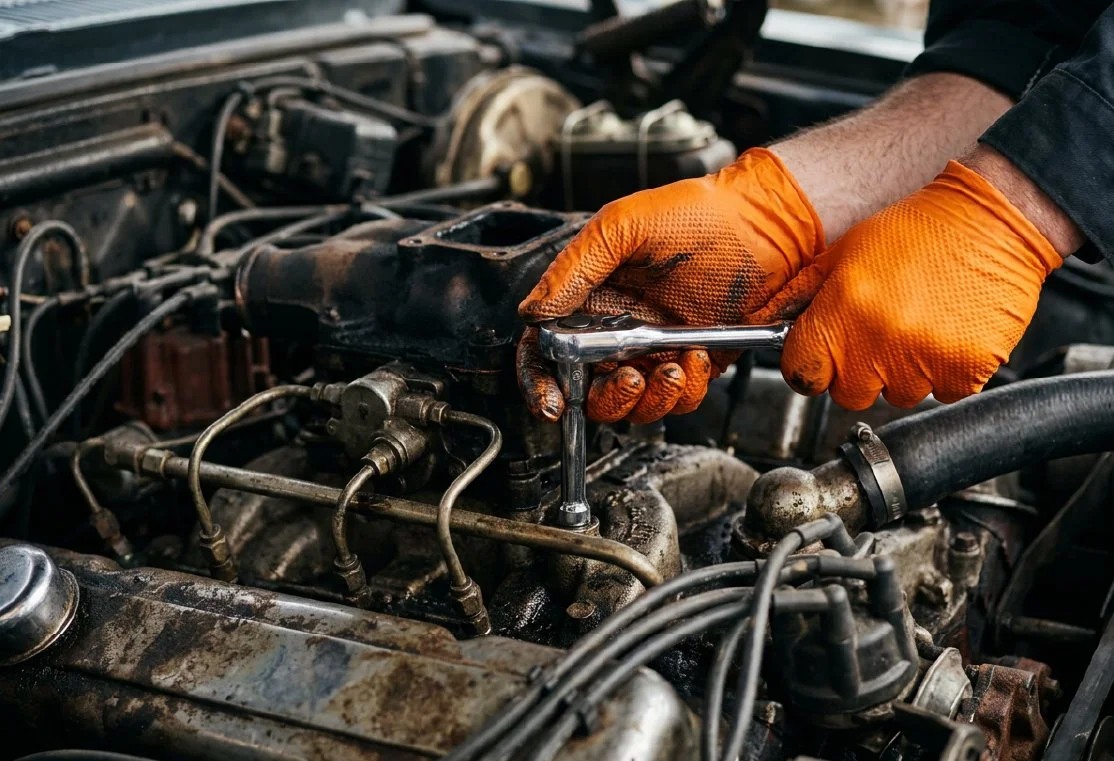
Automotive mechanics work with their hands inside chemical environments every single day.
That might sound like an overstatement. It isn't. A repair shop isn't just a place with tools, lifts, parts, and vehicles — it's a workplace full of oils, fuels, solvents, degreasers, brake cleaners, coolants, battery acid, exhaust, dust, adhesives, lubricants, and cleaning products. The chemical contact is constant, and it's built into the job itself.
When customers think about mechanics' gloves, they usually think about grip, tear resistance, thickness, or price per box. Those details matter. But the bigger conversation is chemical exposure. Mechanics aren't only trying to keep their hands clean — they're trying to reduce repeated contact with the fluids, residues, and contaminants that show up across the workday. That's where the right glove and cleanup system actually matters.
Chemical exposure from multiple directions
Many trades carry chemical exposure risk. Painters handle coatings. Welders deal with fumes. Janitorial workers handle cleaners. What makes automotive repair different is the variety and frequency.
A mechanic can touch multiple chemical categories in a single shift: used motor oil, fuel residue, brake fluid, transmission fluid, coolant, battery acid, grease, adhesives, parts cleaners, and degreasers. Common shop hazards include chemicals, solvents, gasoline and diesel exhaust, battery acid, and fuel-related fire risks — and that's not a list of occasional hazards. It's a description of a typical workday.
The constant mix is the real issue. Not one product. The daily rotation of fluids, residues, vapors, and contaminated surfaces.
The hands are the first point of contact
For mechanics, chemical exposure is usually hands-first.
They grab oily parts, remove filters, handle fuel residue, wipe grease from tools, and touch hoses, lines, caps, fasteners, batteries, brake components, shop rags, and contaminated work surfaces — often in sequence, often without stopping. Even when the job looks routine, the hands are constantly moving between clean and dirty contact points.
Disposable nitrile gloves are standard in automotive environments for exactly this reason — a practical barrier during fluid handling, inspection, repair, and cleanup tasks. But not all glove use is equal. A light inspection task and a greasy diesel repair job are not the same situation. The glove system should reflect that.
Why familiarity is part of the problem
One of the most common mistakes in automotive shops is treating everyday fluids as harmless because they're familiar.
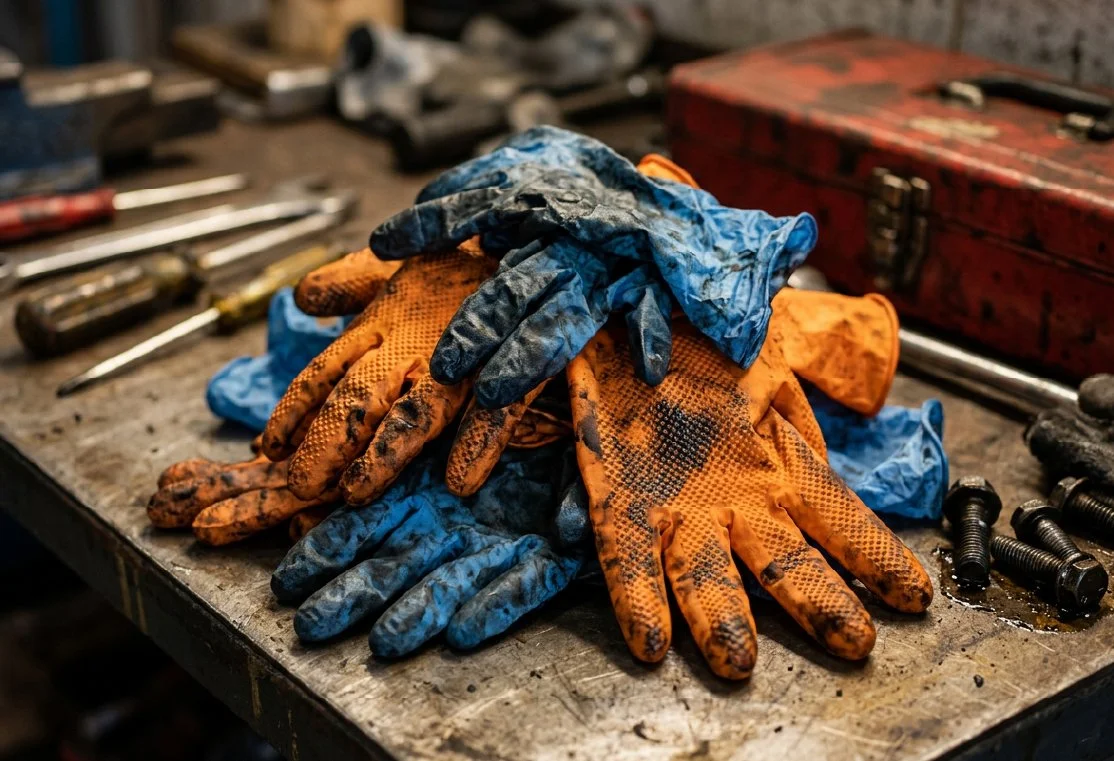
Motor oil, brake fluid, transmission fluid, coolant, fuel residue, and degreasers get handled so often that workers become casual around them. Repeated exposure is still exposure. The products workers touch every day are precisely the ones that require better habits — not fewer precautions.
Solvents, brake cleaners, and parts cleaners add another layer. These products tend to come out during fast-moving jobs where workers are trying to clean parts quickly and move on. That speed leads to skin contact, contaminated gloves, and dirty rags soaked in residue sitting in the work area. Using harsh shop chemicals to clean hands is a habit that shows up in some shops — and it's one dealers can specifically address with better products.
Why "clean hands" isn't the full story
Many shops think gloves are mainly about keeping hands clean. That's only part of the value.
A more useful framing: gloves create a barrier between the worker and the substances they touch repeatedly throughout the day — oils, grime, fluids, residue, cleaners, dirty parts, contaminated surfaces. When dealers frame it that way, the conversation shifts from cosmetic cleanliness to workplace practicality. It becomes easier to explain why stronger nitrile, better grip, better durability, and better cleanup support can genuinely matter in real shop conditions.
How GROWL fits the automotive shop
Three products work together as a system.
GrowlTECH is the everyday nitrile glove for routine automotive work: inspections, parts handling, light fluid contact, tool use, and general shop tasks. The default recommendation when customers need a practical, reliable nitrile option for daily wear.
GrowlGRRRIP fits the heavier-duty end — oily parts, greasy tools, fluid-covered components, and dirty service work where grip and toughness matter more than a standard disposable. The texture gives workers more control in slippery conditions.
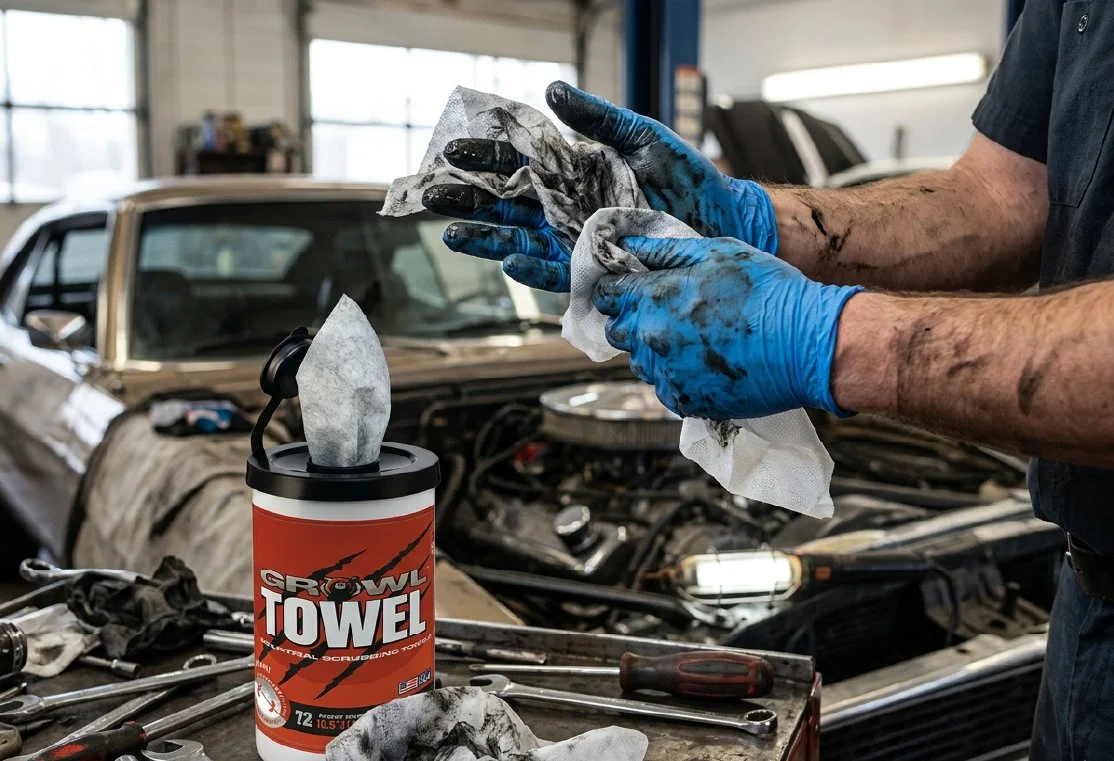
GrowlTOWEL supports the glove system. During a shift, workers often change gloves not because the glove failed — but because it got too dirty to keep using. GrowlTOWEL gives workers a way to wipe glove surfaces, clean tools, and reset the workstation without stopping the job. GrowlTECH or GrowlGRRRIP handles the protection. GrowlTOWEL handles the cleanup in between.
The combined message is straightforward: use the right nitrile glove for the job, and use GrowlTOWEL to keep moving cleanly between tasks.
The dealer opportunity
Instead of asking "How much are you paying for gloves?" ask: "What chemicals and fluids are your mechanics touching every day?"
That question changes everything. It gets customers thinking about actual work conditions — oil, brake fluid, solvents, grease, fuel residue, coolant, battery acid, dirty tools, and contaminated parts. From there, dealers can position the right products around the job: all-purpose nitrile for daily repair work, heavier textured nitrile for oil and grease, stay-wet towels for workstation resets, and task-specific protection where the hazard calls for it.
That's a stronger sale because it connects products to risk, efficiency, and daily shop reality — not just price per box.
Four questions to uncover real needs
When talking to automotive customers, ask:
What fluids and chemicals are mechanics handling most — and are workers treating them as routine?
Are workers using the same glove for inspections, oil changes, brake work, and heavy repairs?
Are gloves being changed because they tear, or because they get too dirty to keep using?
Do workers have a cleanup option at the bay, or do they leave the workstation to wash their hands?
These questions move the conversation toward actual shop conditions — which is where the right recommendation becomes obvious.
The bottom line
Automotive mechanics are among the most chemically exposed workers in the trades because chemical contact is built into the job. Oils, fuels, solvents, brake cleaners, coolants, battery acid, exhaust, grease, cleaning products, contaminated surfaces — the exposure isn't occasional. It's part of every shift.
That's why gloves and cleanup products shouldn't be treated as basic commodities. They're part of the shop's workflow, safety culture, and cost-control system.
For dealers, GROWL creates a practical way to support that conversation: GrowlTECH for everyday nitrile use, GrowlGRRRIP for tougher oily and greasy jobs, GrowlTOWEL for cleanup during the shift. When the job is chemical-heavy, the hand protection conversation should be specific, practical, and built around the way mechanics actually work.