Welding Gloves That Actually Last — What to Look For Before You Buy
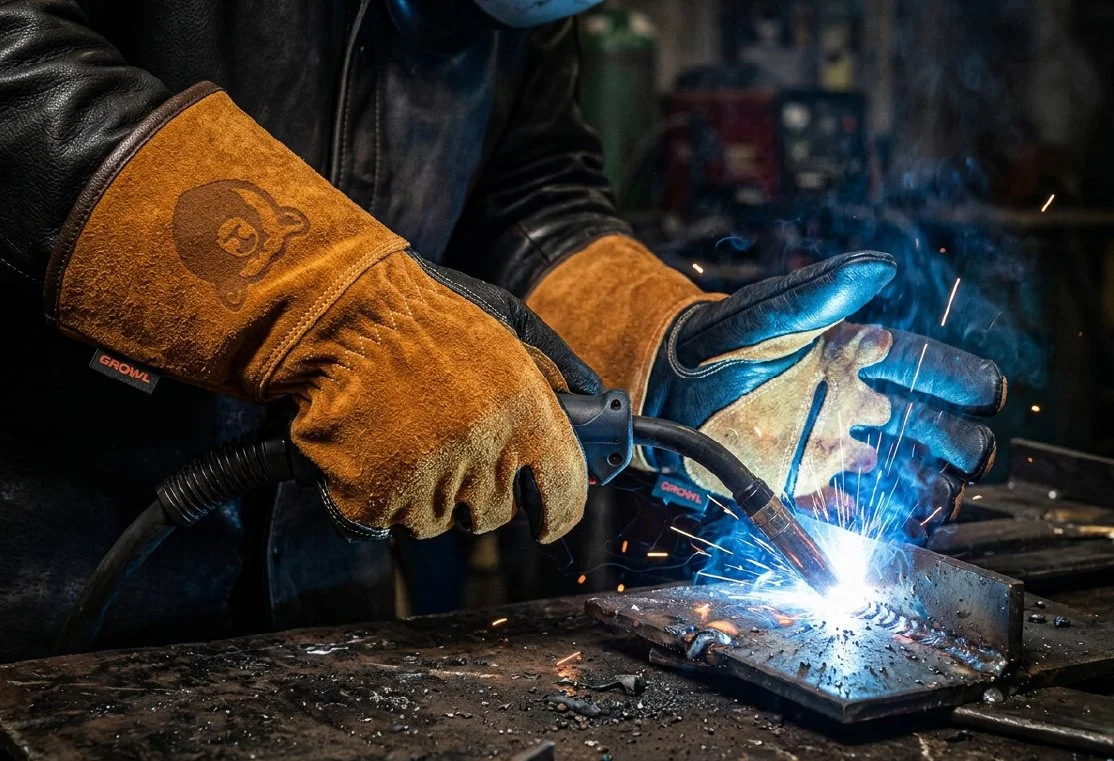
When a customer says "these gloves don't last," the problem isn't always the worker. Sometimes the glove was never built for the job.
Welding puts more stress on a glove than most applications ever will — heat, sparks, spatter, abrasion, sharp edges, hot metal, rough stock, repeated flexing, and grip pressure on top of dragging, clamping, grinding, and handling material before and after the weld. A glove that looks heavy-duty on the shelf can still fail fast if the leather is wrong, the stitching is weak, or the construction doesn't match the actual process.
For dealers, that's the conversation. Welding customers aren't always chasing the cheapest pair — they want a glove that holds up. Here's what actually determines whether it will.
Start with the welding process
The single most important factor in glove longevity is whether the glove was chosen for the right process. A TIG glove used for stick welding wears out fast. A heavy stick glove on a TIG welder frustrates the worker until they pull it off.
MIG welding needs a balance of heat protection, durability, and flexibility. Workers handle the gun, adjust positioning, and move parts — so the glove needs enough protection from sparks and spatter without sacrificing the hand movement to control the weld. Look for durable leather, reinforced wear areas, strong stitching, and enough cuff coverage.
Stick welding exposes gloves to more heat and spatter, so protection and coverage take priority over dexterity. Heavier leather, longer cuff coverage, heat-resistant construction, and strong seams matter more than finger feel here.
TIG welding demands fingertip control. Bulk is the enemy. Softer, more flexible leather, better finger movement, a snugger fit, and strong stitching without added thickness — that's what TIG welders need. Oversized gloves cause mistakes, and mistakes make workers remove the glove entirely.
The longest-lasting glove is the one matched to the actual process. That's the first question in every welding glove conversation.
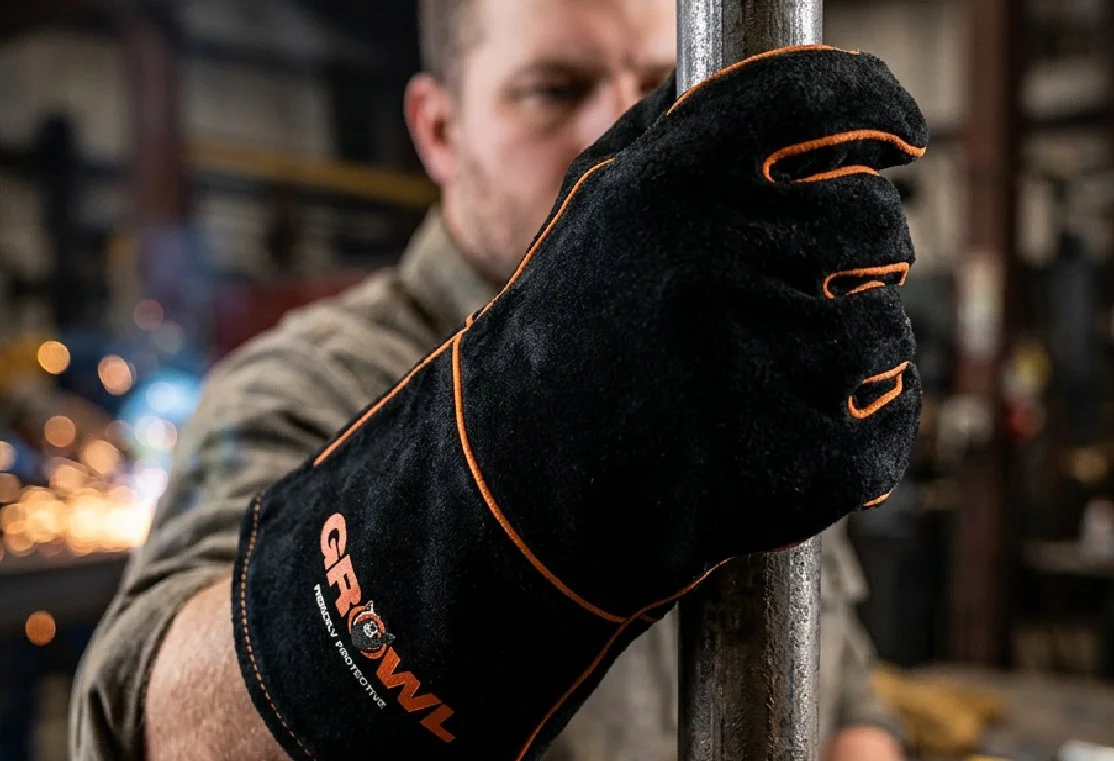
Leather quality is one of the biggest variables in glove life. A glove can look thick and tough on the shelf but crack, harden, or split faster than expected if the leather is poorly finished or wrong for the application. The leather needs to feel durable without being overly rigid — too stiff and workers fight it all day. Different types — cowhide, goatskin, split leather — each offer a different balance of durability, flexibility, and heat resistance depending on the process.
Stitching is where most welding gloves actually fail first. Not the leather — the seams. In welding environments, ordinary thread breaks down from heat, abrasion, and constant flexing. Look closely at the thumb seams, finger seams, palm seams, and cuff attachment. Loose, exposed, or cheaply finished stitching won't survive real shop conditions. Heat-resistant thread — Kevlar being the standard for serious welding gloves — holds up where ordinary thread gives out.
Reinforcement matters, but only in the right places. Palms, thumb saddles, index fingers, and fingertips take the most punishment from torches, stock, and rough material. Too much reinforcement elsewhere reduces dexterity and workers start pulling the glove off for tasks that still require protection. The best welding gloves put reinforcement where the glove fails — not everywhere.
Cuff coverage and heat protection
The cuff is easy to overlook and more important than it gets credit for.
Welding creates sparks, spatter, and hot debris that reach the wrist and forearm — not just the hand. Longer gauntlet-style cuffs provide coverage where a short cuff leaves workers exposed, especially in MIG and stick environments. Look for enough length to overlap with a welding jacket sleeve, a cuff stiff enough to stay open, and easy removal when the glove needs to come off fast.
Heat protection and durability are separate questions. A glove can be thick and still fail quickly. A glove can feel durable but perform poorly around heat. Both need to be evaluated independently — does it protect against the heat level of the job, and will it hold up to daily handling?
Comfort determines whether workers wear it
A glove that doesn't get worn doesn't protect anyone.
If a welding glove is too stiff, too hot, too bulky, or poorly shaped, workers remove it exactly when protection matters most. Natural hand movement, grip control, proper sizing, and enough dexterity for the process without cutting off movement — that's what keeps the glove on the hand. Comfort isn't a secondary concern. It's what separates a glove that gets worn consistently from one that sits on the bench.
Samples close this faster than any spec sheet. Letting a customer feel the difference between a cheap glove and a better-built one is the most effective thing a dealer can do.
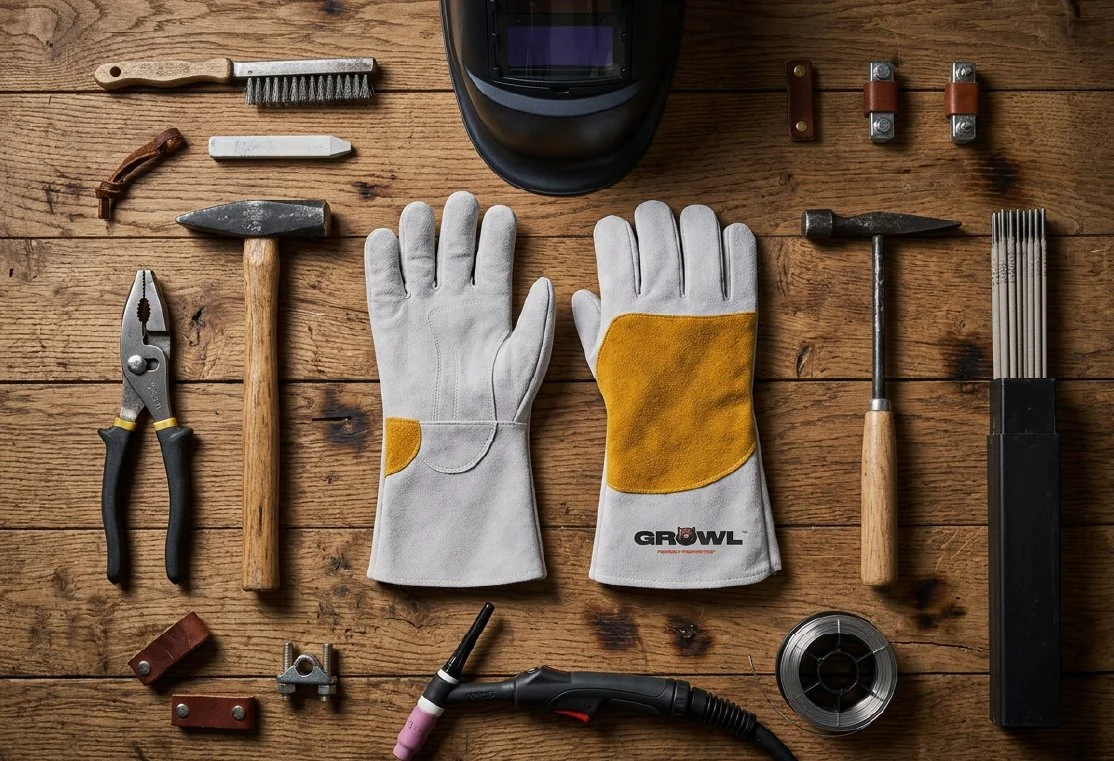
A cheap welding glove isn't always a low-cost glove.
If it wears out fast, fails at the seams, stiffens up, or gets rejected by workers, the shop replaces it more often and spends more over time than if they'd bought something built to last. Replacement frequency, worker frustration, inconsistent PPE use, and wasted pairs all add up. For dealers, that's the real conversation: don't sell the cheapest glove — sell the glove that lasts through the actual work.
Where ClawFORGE fits
ClawFORGE is for customers tired of welding gloves that look heavy-duty but break down under real shop conditions.
Split cowhide leather built for welding and industrial work. Kevlar thread reinforcing the seams where ordinary stitching fails first. Construction designed for the work that happens around the weld — not just the weld itself. For dealers, it's a specific upgrade story: better materials, stronger seams, built to last where basic leather welding gloves give out.
Four questions to make the sale easier
Before recommending any welding glove, ask:
What welding process are workers running most — MIG, stick, or TIG?
Where are current gloves failing — seams, leather, cuff, or heat breakdown?
Do workers need more heat protection, more dexterity, or more abrasion resistance?
Are gloves being replaced because they're damaged, or because workers won't wear them?
Those questions move the conversation from price to performance — which is where dealers actually win the account.
The bottom line
Welding gloves that actually last are built for the job — not just made to look tough on the shelf.
The right leather, heat-resistant stitching, smart reinforcement, proper cuff coverage, and a fit workers can use through a full shift: that's what separates a glove that lasts from one that gets swapped out too soon. Find out what process the worker is running, where current gloves fail, and whether comfort is part of the problem.
The glove that matches the work is the one that lasts. Help customers find that glove and you become the supplier who actually understands welding protection — not just the one with the lowest price per pair.