The Mechanic's Guide to Choosing the Right Glove for Every Job
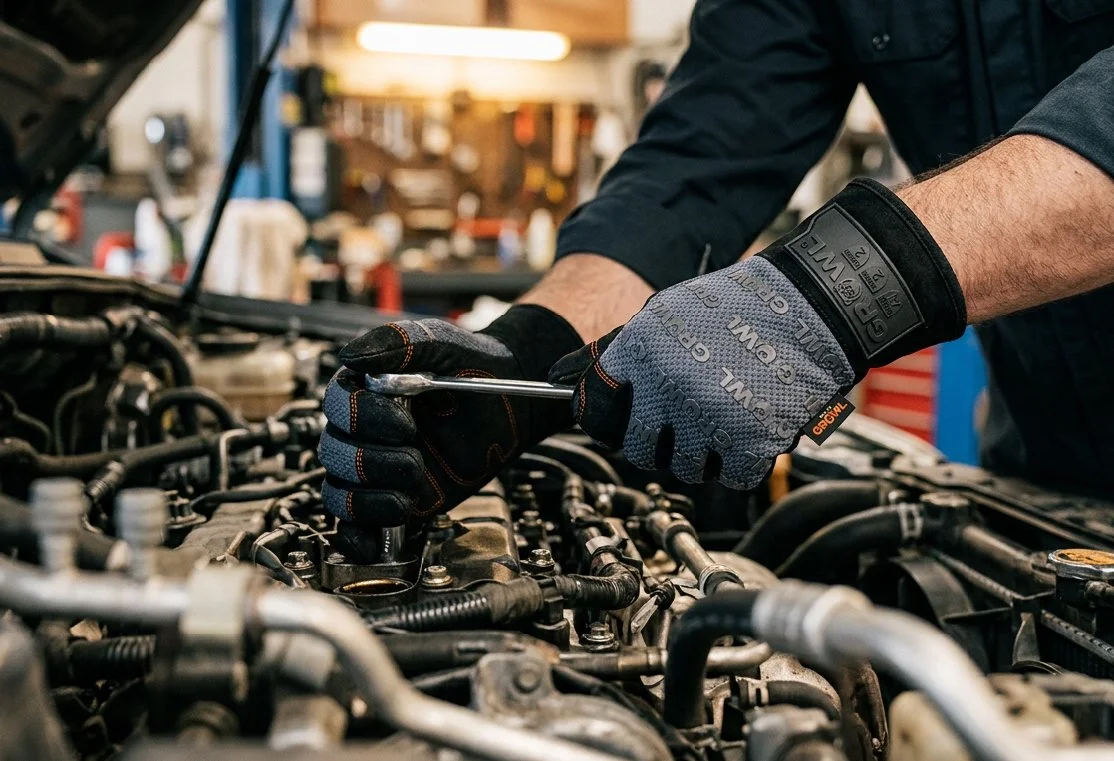
Mechanics don't do one kind of work all day.
One minute they're handling oily parts. Next, they're working around sharp edges, grabbing tools, changing fluids, cleaning up grease, moving tires, inspecting components, or reaching into tight spaces where grip and feel both matter at the same time. The work shifts constantly, and the demands on a glove shift with it.
That's why one glove doesn't always fit every job.
The right glove helps workers stay productive, protect their hands, maintain grip, and avoid burning through disposable gloves too quickly. The wrong one can slow the job down, tear too soon, feel bulky, or just fail to match what the task actually needs. For shops and dealers, glove selection shouldn't be complicated — it should be practical.
Here's how mechanics can choose the right glove for the job, and where different Growl glove options fit into the workday.
Start With the Task, Not the Glove
The biggest mistake shops make is choosing gloves only by material, thickness, or price.
A better question: what is the worker actually doing?
A mechanic changing oil has different needs than someone handling sharp metal. A technician cleaning greasy tools has different needs than someone working on tires. Quick inspection work calls for more dexterity, while heavy-duty repair demands stronger grip and durability. Before choosing a glove, look at the job — is the work oily or dry? Does the worker need disposable protection or reusable durability? Are there sharp edges or rough materials? Will they be handling fluids, and does the glove need to stay comfortable through long wear?
Once those questions get answered, glove choice becomes a lot easier.
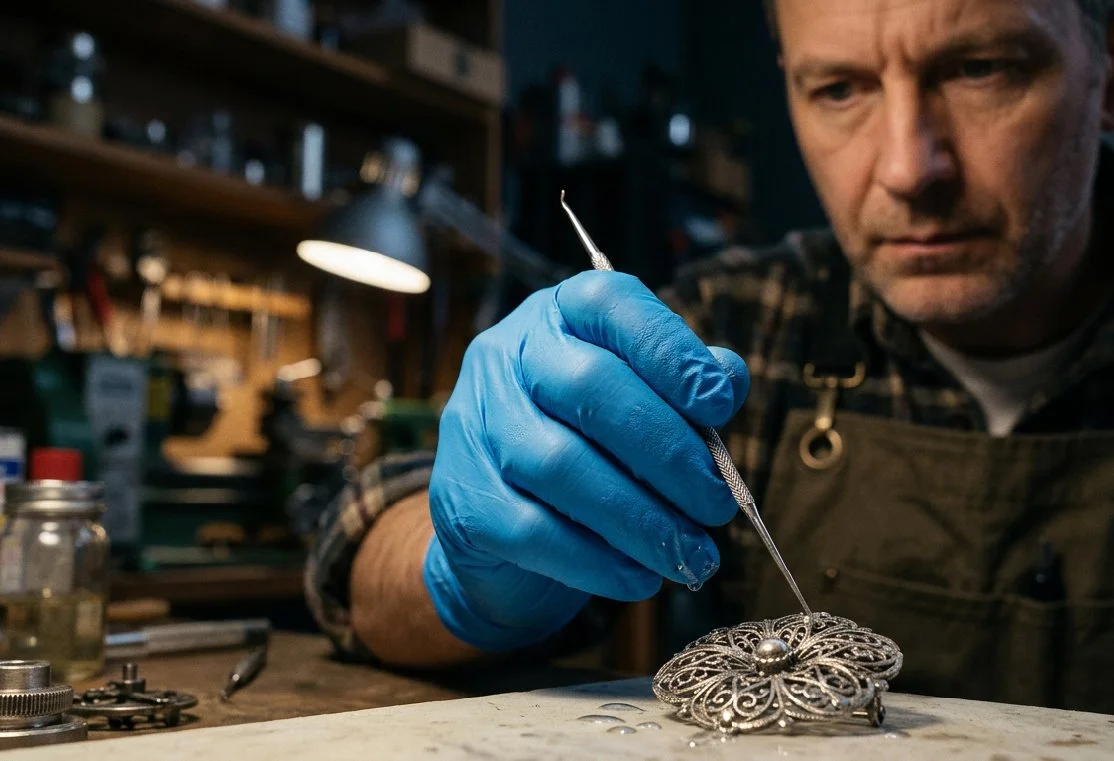
For Everyday Shop Work: Choose an All-Purpose Nitrile Glove
Every mechanic needs a reliable default glove — the one workers reach for during routine tasks like inspections, basic repairs, parts handling, tool use, fluid checks, light cleanup, and general shop work.
For that category, nitrile disposable gloves are the practical choice. They give workers a clean barrier while still allowing dexterity and movement. GrowlTECH nitrile gloves fit this role as the all-purpose industrial glove, ideal for general mechanic work, light fluid handling, parts inspection, workbench tasks, tool handling, quick service jobs, automotive and fleet maintenance, and everyday shop cleanup.
The goal here isn't to overbuild the glove. It's to give workers something dependable they can reach for across the daily jobs that happen again and again.
Dealer talking point: GrowlTECH is the everyday nitrile glove customers can standardize around for routine industrial and mechanical work.
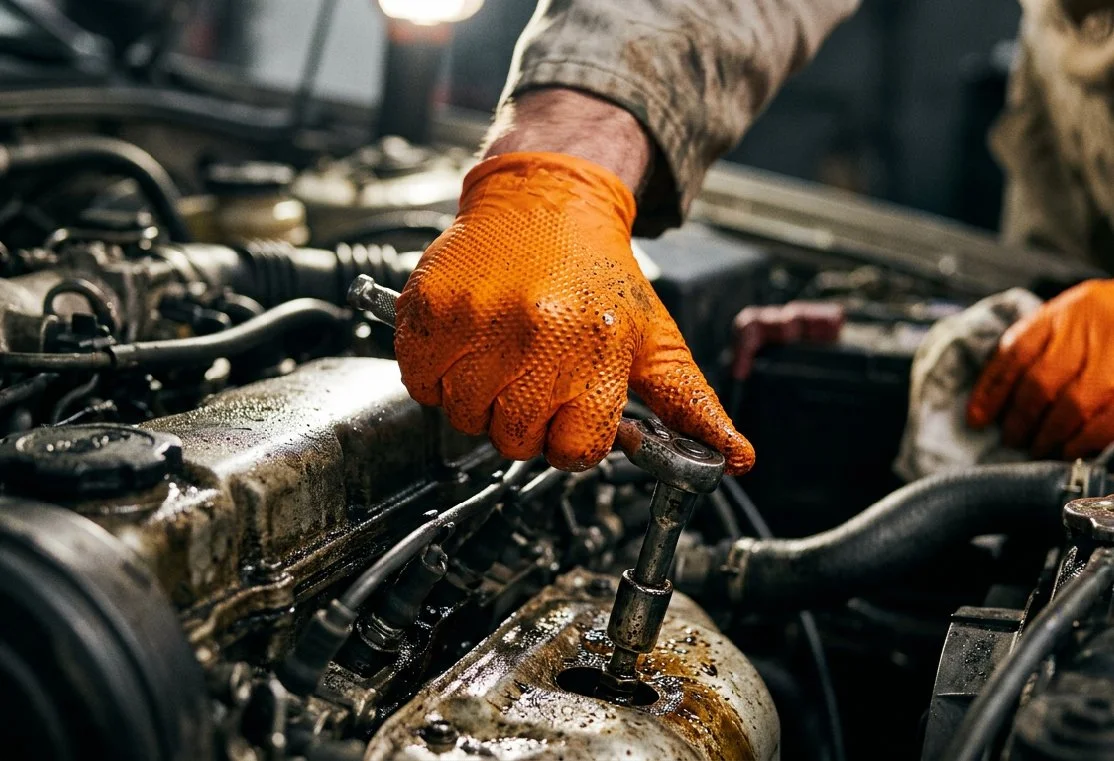
For Oily, Greasy, High-Grip Jobs: Choose a Textured Nitrile Glove
Oil and grease change everything.
When gloves get slippery, workers lose control — and the job gets slower, messier, and more frustrating. For mechanics handling oily tools, greasy parts, fluid-covered components, or engine work, grip becomes one of the most important features on the glove. A standard nitrile glove isn't enough.
GrowlGRRRIP is built for tougher disposable glove jobs where workers need stronger grip and more confidence in dirty, oily conditions. It's a strong fit for oil changes, greasy engine work, fluid handling, heavy automotive repair, diesel maintenance, oily tool handling, and dirty service bay work generally. When mechanics are complaining that gloves are slipping, stretching, or failing too soon in greasy conditions, that's a sign they need a more aggressive nitrile option.
Dealer talking point: For customers who already buy nitrile gloves but need better performance in oil and grease, GrowlGRRRIP gives you a clear upgrade conversation.
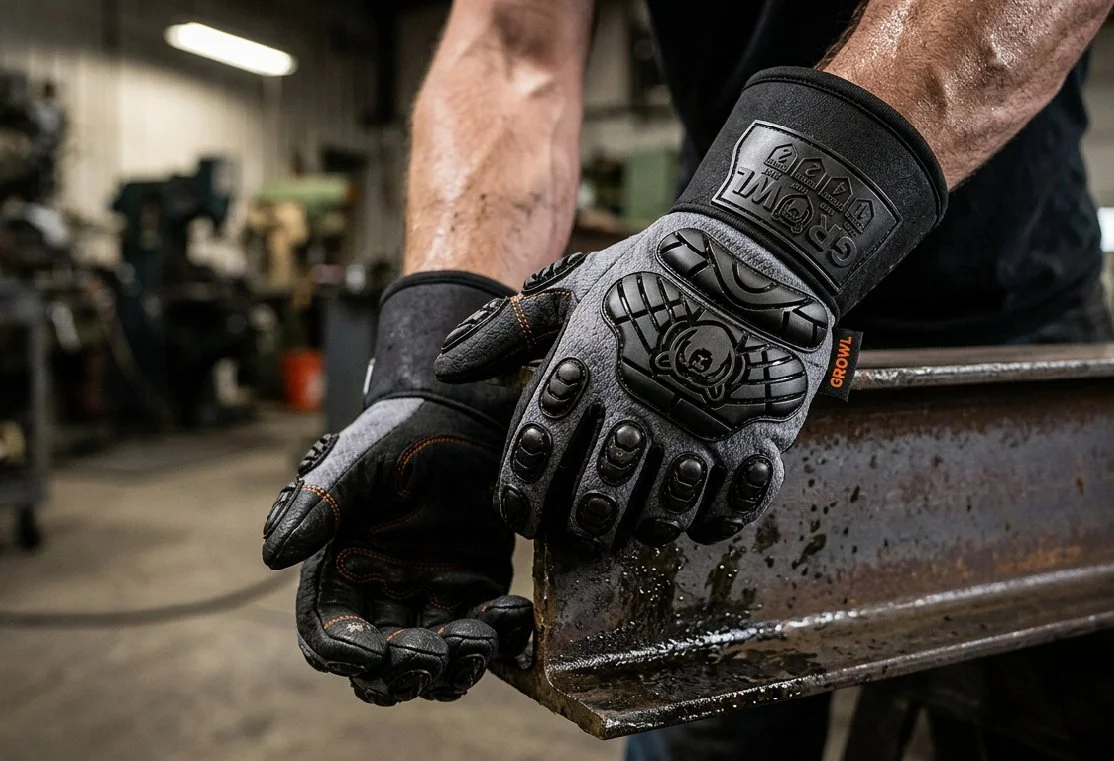
For Heavy Handling and Rough Work: Choose a Coated Work Glove
Not every mechanic job calls for a disposable glove. Some tasks require a reusable work glove that can handle abrasion and repeated contact with rough materials — and disposable nitrile simply isn't built for that.
Tires, wheels, metal parts, equipment handling, material movement, heavy tools, rough surfaces, yard or fleet work. For jobs like these, a coated work glove makes far more sense. It gives workers better durability, better hand coverage, and more confidence when handling heavier items.
ClawFORCE fits this category as a strong mechanic and industrial work glove for hands-on tasks where grip, durability, and repeated use matter. It's the right call for tire handling, wheel work, parts movement, equipment repair, general maintenance, warehouse and shop handling, and any job where disposable gloves aren't enough.
Dealer talking point: ClawFORCE is the glove to recommend when customers need reusable handling performance, not just disposable barrier protection.
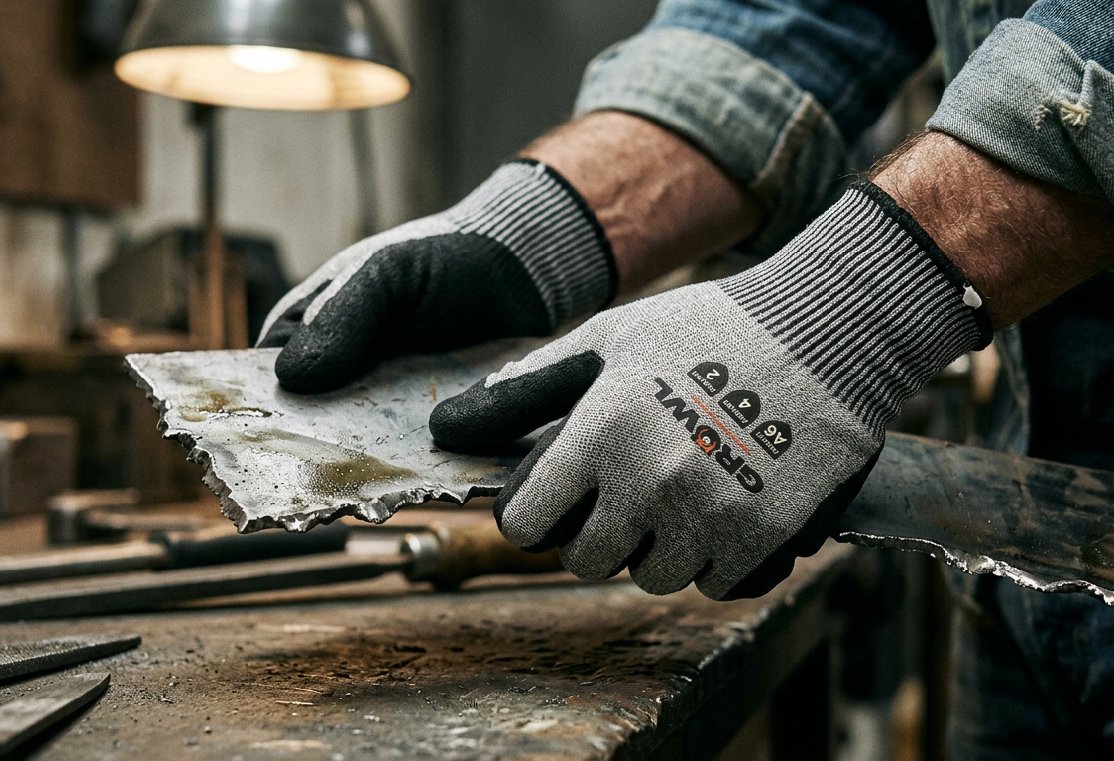
For Jobs With Sharp Edges: Consider Cut-Resistant Protection
Mechanics regularly work around sharp metal, unfinished edges, brackets, panels, blades, worn parts, and fabrication-related hazards. Disposable gloves are not designed to solve that problem — and it's worth being direct about that with customers.
If the task includes sharp edges or cut risk, workers should be using cut-resistant gloves matched to the hazard level. Sheet metal handling, fabrication support, sharp parts, damaged components, glass or sharp debris, certain maintenance and teardown tasks — these all require mechanical protection, not just barrier protection. The key point is simple: don't use a disposable nitrile glove as a substitute for cut protection.
For mechanic and fleet applications with sharp-edge exposure, ClawGUARD A4 Fully Lined is worth putting in the conversation. It's built for the kind of cut hazards that show up in automotive, fleet, and maintenance environments — sharp brackets, damaged components, rough metal edges — while still supporting the hand movement mechanics need to keep working. Talk to your Growl rep about matching the right cut protection level to the specific hazard.
Dealer talking point: When the job involves sharp edges, move the conversation from disposable gloves to task-specific hand protection.
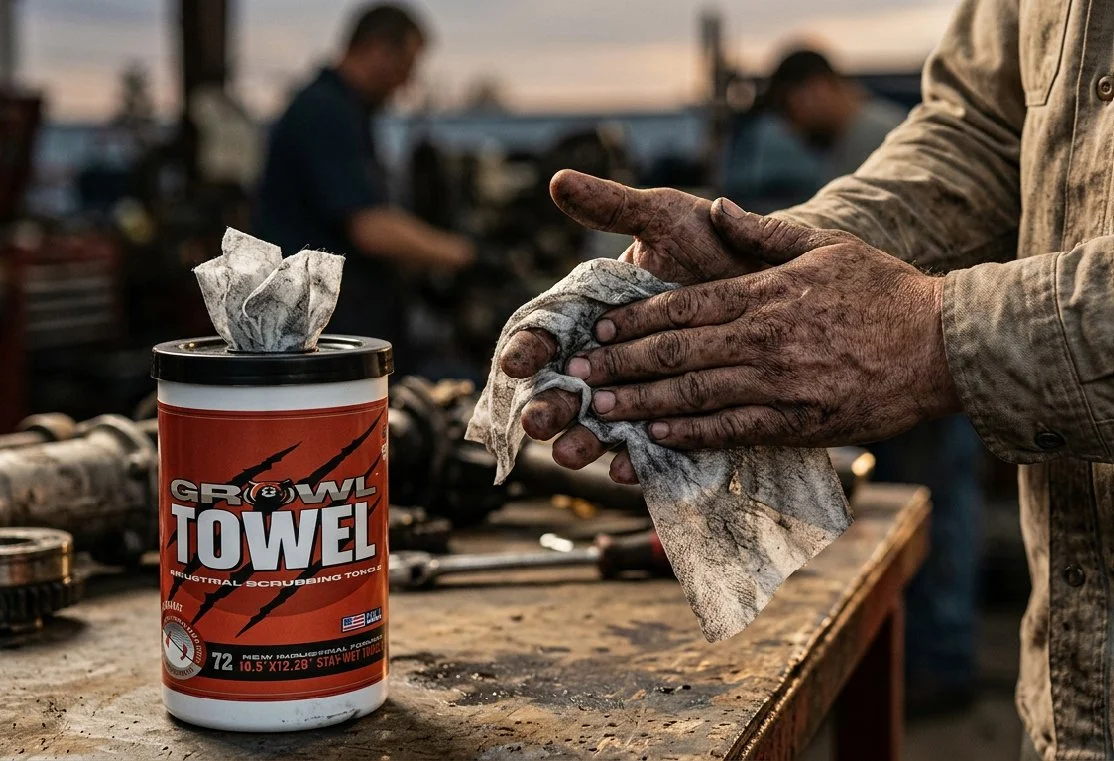
For Cleanup: Pair Gloves With Stay-Wet Towels
Glove choice is only half the workflow.
Mechanics also need a way to clean their hands, gloves, tools, and work areas during the job — not just at the end of it. Many workers change nitrile gloves not because the glove is damaged, but because it's too dirty to keep using. If the glove is still intact but covered in grease, oil, or grime, a stay-wet towel can clean the glove surface so the worker keeps moving instead of automatically grabbing a new pair.
GrowlTOWEL is useful for wiping nitrile gloves during the job, cleaning greasy hands, removing grime from tools, wiping workbench surfaces, handles, and parts, reducing trips to the sink, and helping workers reset between tasks. For dealers, the pairing message is straightforward: gloves protect the hands, and GrowlTOWEL helps workers clean up and keep going.
A Simple Glove Selection Framework for Mechanics
Here's an easy way to think about it:
1. General shop work Use an all-purpose nitrile glove like GrowlTECH. Best for everyday tasks, inspections, light fluids, parts handling, and general maintenance.
2. Oily and greasy work Use a textured nitrile glove like GrowlGRRRIP. Best for oil, grease, fluids, dirty tools, and jobs where grip is the priority.
3. Heavy handling Use a coated work glove like ClawFORCE. Best for tires, wheels, rough parts, equipment handling, and repeated-use tasks.
4. Sharp edge exposure Use a cut-resistant glove matched to the hazard. ClawGUARD A4 Fully Lined is a strong fit for mechanic and fleet environments. Talk to your Growl rep about the right protection level for the specific task.
5. Cleanup and glove life support Use GrowlTOWEL alongside nitrile disposables. Best for wiping gloves, hands, tools, benches, and cutting down on unnecessary glove changes.
How Dealers Can Use This Guide
For dealers, approaching glove sales this way moves the conversation away from price alone — and that's where it gets more valuable.
Instead of asking how much the customer is paying for gloves, ask: "What jobs are your workers using those gloves for?"
That question opens up the real conversation. A customer may be using a thin disposable glove for greasy work that needs more grip. They may be running expensive heavy-duty gloves through tasks where a practical all-purpose nitrile would do the job. They may be burning through disposables because workers don't have a way to clean them during the shift. Or they may be using one glove for everything, even when the work clearly calls for different levels of protection.
That gives dealers the chance to recommend a better system. Not just another box of gloves.
The Bottom Line
The right glove depends on the job. Mechanics need dexterity for detail work, grip for oil and grease, durability for handling, cut protection for sharp edges, and cleanup support for the mess that happens throughout the day.
Growl makes that conversation easier. GrowlTECH for all-purpose nitrile, GrowlGRRRIP for oily high-grip jobs, ClawFORCE for tougher reusable work, ClawGUARD A4 Fully Lined for sharp-edge hazards, and GrowlTOWEL to help workers clean up, reset, and keep moving.
For shops, that means better glove selection. For dealers, it's a stronger way to guide customers toward the right product for the right job — and a more complete lineup to sell.
Dealer Takeaway
Don't sell gloves as one-size-fits-all. Sell them by job type.
When customers understand which glove fits which task, they buy with more confidence, use the right product more consistently, and see more value from the full Growl lineup. Ready to help your customers choose the right glove for every job? Start with the Growl mechanic glove guide and build the right hand protection system around the work they actually do.