ClawFORGE Deep Dive Why Kevlar ThreaD AND Split Cowhide Matter for High Heat Work
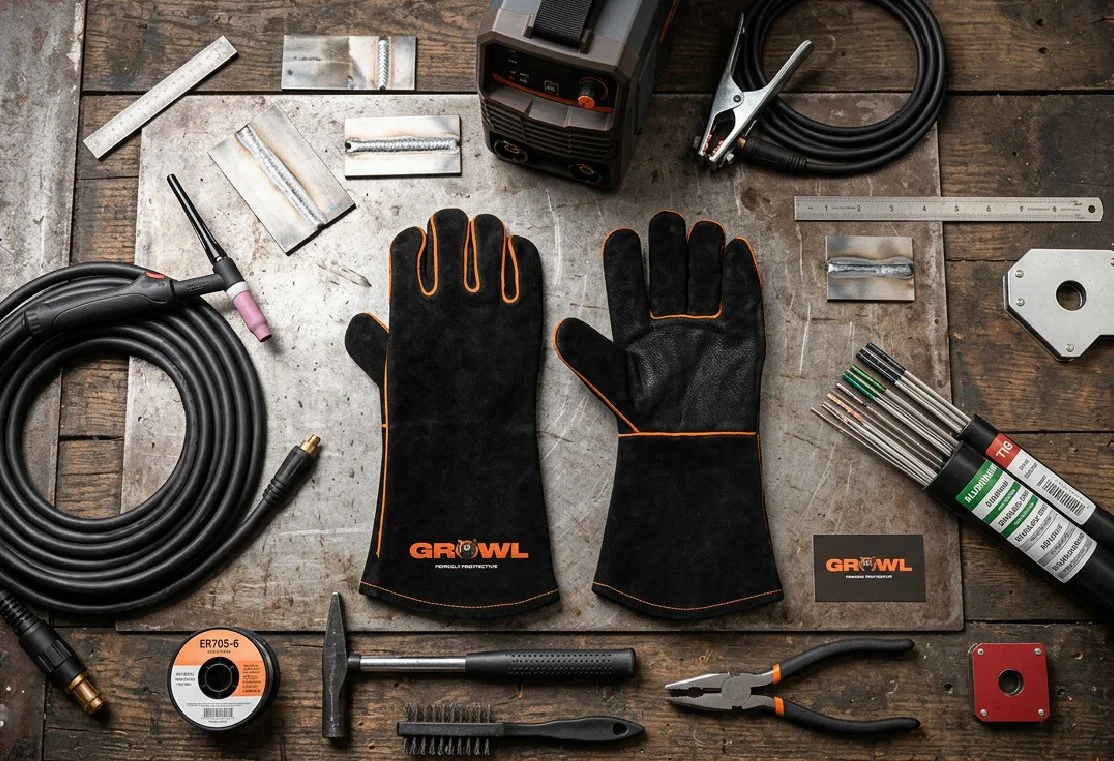
Welding gloves usually fail in predictable ways.
The seams start opening. The palm wears down. The thumb area weakens. After repeated heat exposure, the glove stiffens, the cuff gets beaten up, and the worker reaches for another pair — again.
In most cases, it's not one dramatic incident. It's repeated exposure to the same tough conditions: heat, sparks, spatter, metal edges, tool pressure, rough material, and constant hand movement, shift after shift. That's why construction matters. In a welding glove, two details tell you most of what you need to know about how long it's going to last: the thread and the leather.
Why Kevlar thread matters
The stitching is one of the most important parts of a welding glove — and one of the most overlooked.
If the leather is strong but the thread fails, the glove fails. Seams in a welding glove are under constant stress. Workers grip torches, pick up material, drag metal, handle rough components, and open and close their hands all day — around heat, sparks, and abrasion. Regular stitching becomes the weak point in that environment.
ClawFORGE uses Kevlar thread because it's built for that stress. Known for strength and heat resistance, Kevlar thread reinforces the seams where ordinary stitching breaks down fastest — the points that flex most, take the most heat, and bear the most tension through a full shift.
For dealers, the explanation is clean: Kevlar thread keeps the glove together when ordinary stitching gives out first.
Dealer talking point: When a customer asks why the seams last, the answer is there — Kevlar thread where it matters, not just leather on the outside.
Why split cowhide is the right leather for welding work
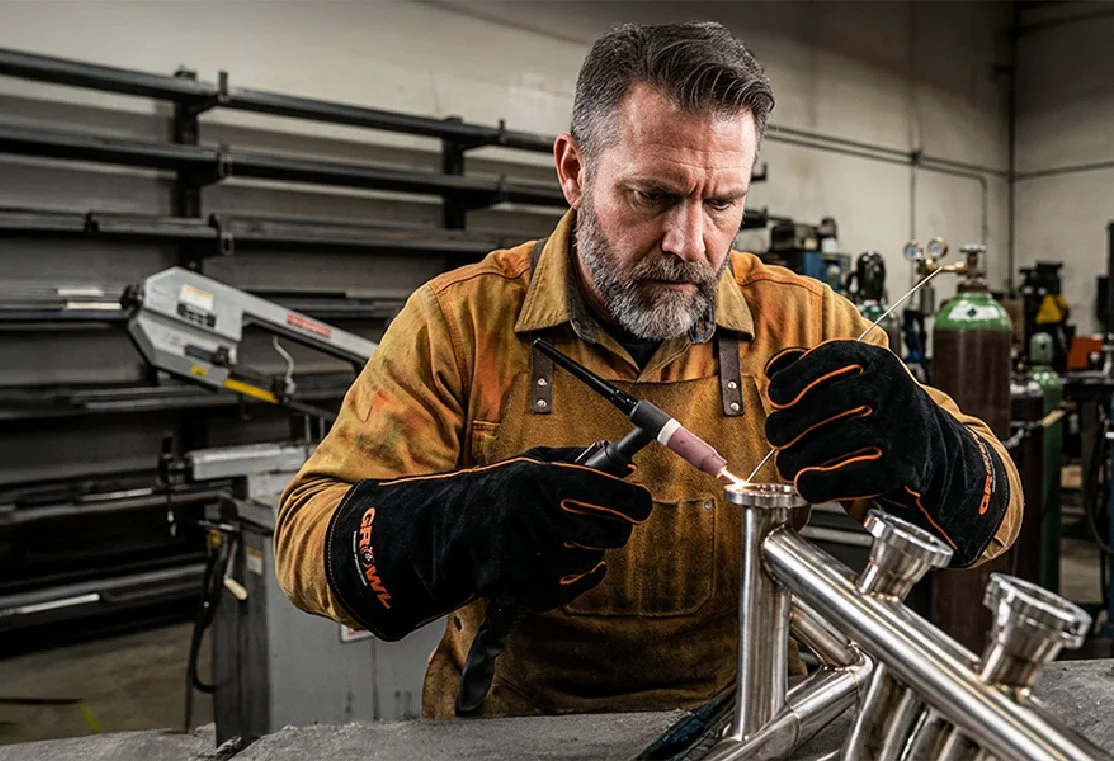
Split cowhide delivers the right balance of durability, protection, and real-world performance for shop environments.
The split layer of cowhide has a rougher, more textured surface than grain leather — and that texture is an advantage in welding applications. It grips rough materials, holds up to abrasion, and handles the work that happens around the weld: dragging steel, adjusting clamps, moving parts, prepping surfaces, handling rough stock, and dealing with sparks and spatter all shift long.
ClawFORGE uses split cowhide because welding gloves need to survive more than heat. They need to handle everything that comes with it.
Dealer talking point: Split cowhide is rugged leather for rugged work — a practical material story that's easy to explain at the counter.
Why the combination matters
Individually, Kevlar thread and split cowhide are strong features. Together, they close the two most common failure points in a welding glove. Split cowhide gives the exterior a durable body built for abrasion, handling, and welding environments. Kevlar thread holds that construction together through heat, flexing, stress, and repeated use. A glove is only as good as its weakest point — and welding gloves have two obvious candidates. Durable leather with weak seams still fails. Strong stitching with leather that wears too fast still fails.
When both are built for the work, the glove delivers value across a full season of shop use. That's the ClawFORGE story: split cowhide where the work hits hardest, Kevlar thread where ordinary gloves fail first.
The real cost of cheap welding gloves
Cheap welding gloves look like a deal right up until they fail too often.If a shop burns through gloves quickly, the real cost isn't just the price per pair. It's replacement frequency, worker frustration, inconsistent protection, and time spent repeatedly ordering a product that doesn't hold up. For dealers, that's the stronger conversation: a better-built glove reduces the waste that comes from gloves failing before they should.
That's not an argument for the most expensive option. It's an argument for the right glove. ClawFORGE gives dealers a clear upgrade story for customers tired of welding gloves that look heavy-duty but break down under real shop conditions.
Questions to move the sale forward
Before recommending ClawFORGE, ask:
Where are current gloves failing first — seams, palm, thumb, or cuff?
Are workers doing dedicated welding, or are they also handling rough metal, grinding, and prepping surfaces between welds?
How often are they replacing gloves — and is the frequency a complaint?
Do they need a glove for both welding and general shop work, or strictly heat protection?
Those questions move the conversation from "how much is it?" to "is this glove actually built for what your workers are doing?"
The bottom line
Kevlar thread and split cowhide matter because welding gloves fail where materials are weakest. The seams go first. Then the leather. Then the glove breaks down under heat, abrasion, flexing, and daily shop abuse — often faster than it should. ClawFORGE is built around a stronger foundation: split cowhide leather for rugged welding and industrial work, with Kevlar thread reinforcing the construction where stitching strength is tested most. For shops, that means a glove built for serious use. For dealers, it means a better answer when customers ask what makes it different. Start with the construction. Split cowhide where the work hits hardest. Kevlar thread where ordinary gloves fail first.