ClawGUARD Matching Cut-Resistant Gloves to the Right Industrial Environment
Most cut-resistant glove conversations start with the rating. They should start with the job.
A glove that works in a warehouse may not be nearly enough for sheet metal handling. A glove built for fabrication may feel too stiff for assembly work. And a glove with the right cut level can still be the wrong recommendation if the coating, grip, or fit don't match how the work actually gets done.
The best ClawGUARD conversation starts with the environment — not the number on the spec sheet. For dealers, that also creates a stronger sale: instead of asking "what cut level do you want?" ask "what are your workers handling, and where?" One question shift. Completely different conversation.
Start with the environment, not just the cut level
Cut level matters. But it's only part of the picture. The same rating can feel completely different depending on glove design, liner, coating, thickness, and the task. Two customers can both ask for "cut-resistant gloves" and need entirely different products because the environments around their hands are entirely different.
Here's a dealer framework for matching ClawGUARD to the work.
Environment 1: Warehousing and general material handling
Warehouse teams move fast and work long shifts. Cut risk may not be severe, but contact with sharp packaging edges, carton straps, tools, and rough materials is constant. A glove that feels bulky or slows workers down gets pulled off — and a glove sitting on a shelf doesn't protect anyone.
ClawGUARD fits here for carton handling, light material handling, packaging, palletizing, and general warehouse maintenance. The pitch is balance: enough protection for everyday handling hazards with the flexibility workers need to wear it all shift.
Dealer talking point: For warehouse customers, lead with comfort, grip, and everyday protection — not cut level.
Environment 2: Automotive and fleet maintenance
Mechanics deal with sharp edges more often than most people realize. Brackets, sheet metal, worn components, hose clamps, and damaged parts all create real cut hazards — and mechanics also need dexterity because they're working with tools and fasteners in tight spaces. Protection and hand control have to coexist.
ClawGUARD fits for general automotive repair, fleet maintenance, handling sharp parts, underbody work, and teardown and inspection tasks. The glove shouldn't feel heavy enough to prevent tool use or fine-motor control.
Dealer talking point: For automotive and fleet accounts, position ClawGUARD as cut protection for maintenance environments where sharp edges are part of the job but workers still need hand feel.
Environment 3: Metal fabrication and sheet metal handling
Fabrication shops and sheet metal teams deal with sharp edges, burrs, stamped parts, unfinished cuts, and metal stock throughout the day. This is where cut protection becomes the primary requirement.
ClawGUARD fits for sheet metal handling, fabrication support, stamped parts, metal stock movement, assembly around sharp components, and handling unfinished materials. In metal environments, customers often already know they have a cut problem. Get specific: where exactly are workers getting cut — fingertips, palm, thumb? That answer drives the right recommendation.
Dealer talking point: For metal fabrication customers, focus on cut risk, glove failure points, and where edge exposure is highest.
Environment 4: Glass, sharp plastics, and fragile materials
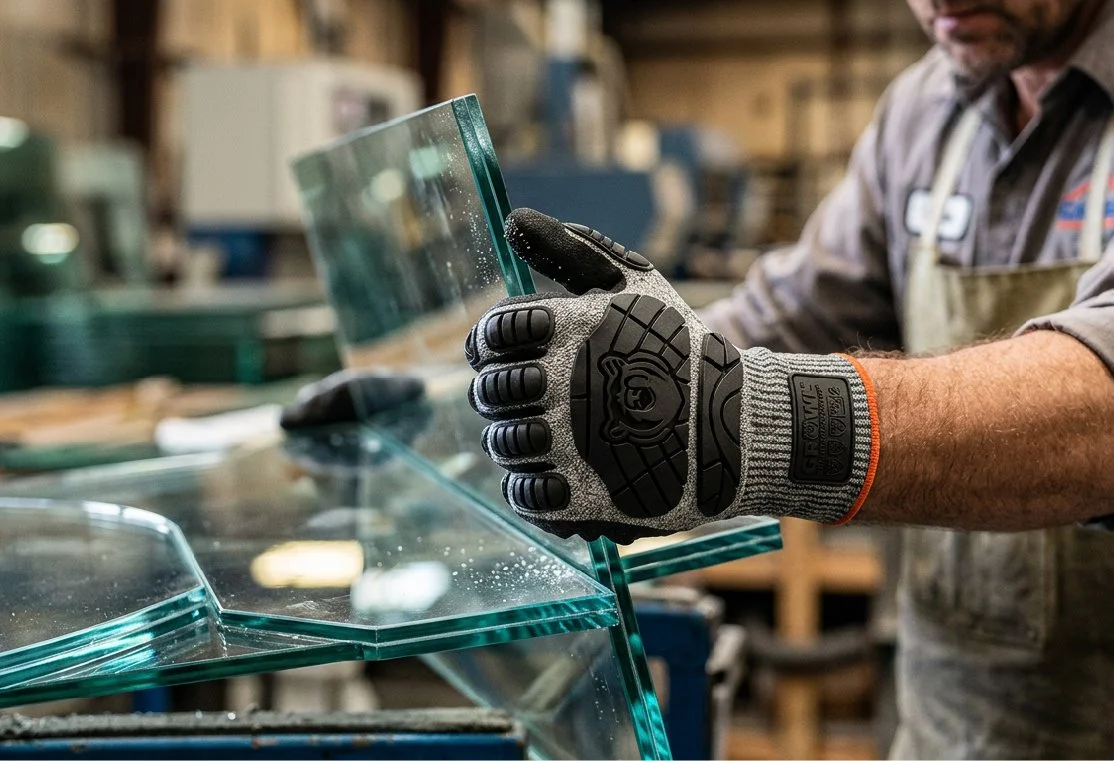
Glass and sharp plastics create a different problem. Workers need cut protection but they also need grip and control — dropping the material creates a safety risk and damages product. The glove has to protect without removing feel.
ClawGUARD fits for glass handling, sharp plastic components, acrylic and panel handling, material inspection, and fragile part movement. Fit and grip matter here as much as the cut liner.
Dealer talking point: For glass and sharp plastic customers, lead with grip, control, and the balance between cut resistance and careful handling.
Environment 5: Construction, jobsite, and field work
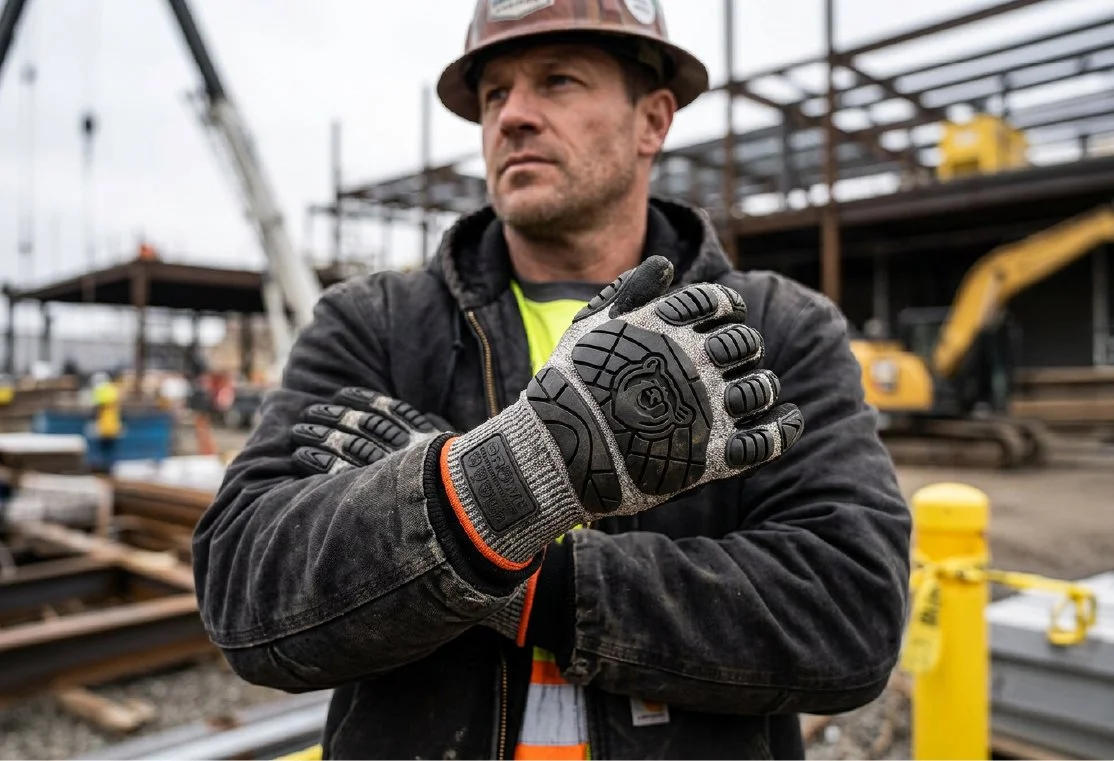
Construction environments are unpredictable. Workers handle metal, lumber, pipe, wire, hardware, and rough debris — in conditions that shift between dry, wet, muddy, and cold. The glove needs to handle mixed hazards consistently across all of them.
ClawGUARD fits for jobsite material handling, general construction support, rough material movement, equipment maintenance, and field service work. Durability and grip matter as much as cut protection when materials are dirty and conditions change.
Dealer talking point: For construction and field accounts, position ClawGUARD around mixed-hazard protection, durability, and grip across variable site conditions.
Environment 6: Recycling, scrap, and waste handling
Recycling and scrap environments involve genuinely unpredictable materials — sharp metal, broken parts, wire, glass, jagged plastic, and unknown debris. Workers may not always know what they're grabbing. That unpredictability is the real hazard.
ClawGUARD fits for scrap handling, recycling operations, sorting tasks, and mixed sharp-material environments. Ask detailed questions before recommending — hazard severity, puncture risk, and durability all need to be part of the conversation.
Dealer talking point: For scrap and recycling customers, focus on hazard severity and unpredictable materials — and confirm whether cut resistance alone is enough.
Environment 7: Manufacturing and assembly
Manufacturing environments vary widely. Some teams handle small parts with precision. Others work with stamped metal, sharp plastic, or rough components. Assembly workers often repeat precise movements for long shifts, which means worker acceptance is a real factor — a glove that slows the line or makes precision work harder will get removed.
ClawGUARD fits for assembly line work, small parts handling, sharp component handling, light manufacturing, and production tasks. Match the glove to the station, not the facility — different workstations in the same building may need different protection.
Dealer talking point: For manufacturing customers, ask about the specific station. One line may need a different glove than the one next to it.
Grip, coating, and the one thing dealers miss
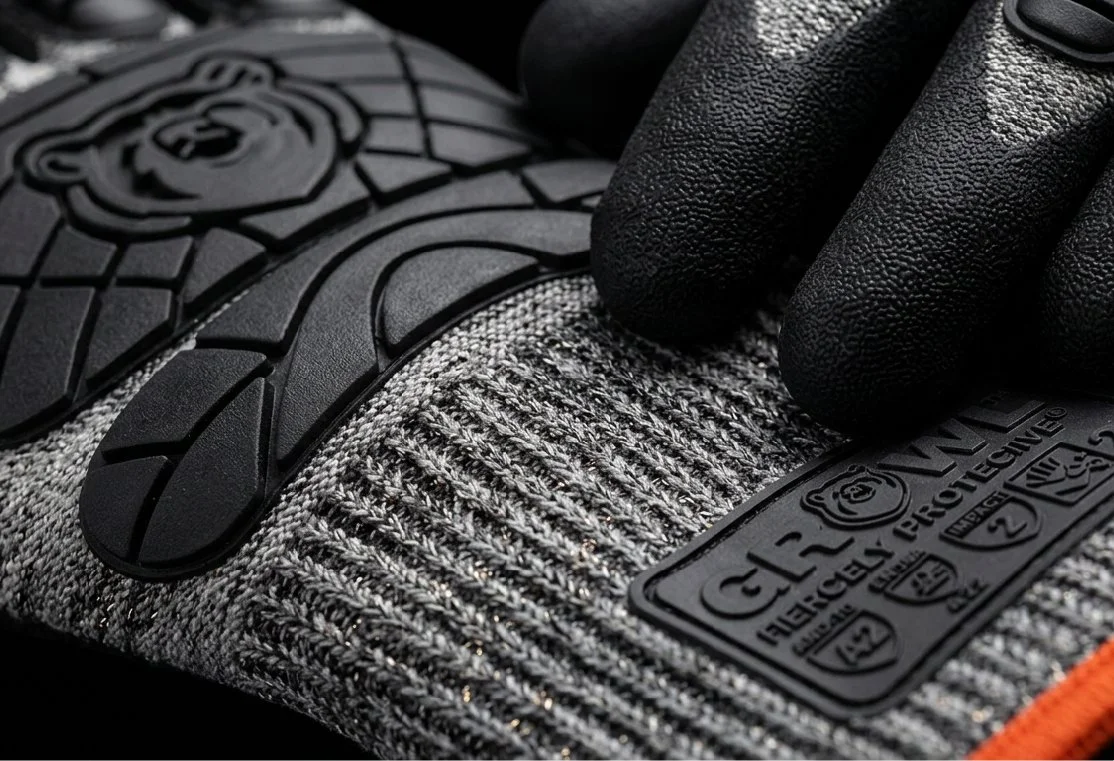
Cut resistance is only part of what makes the right glove. The coating determines real-world performance — a worker handling dry cartons needs something different from someone handling oily metal or wet glass. Workers doing precision work need fingertip feel. Workers in rough environments need palms that outlast the cut liner.
And the glove only works if workers wear it. If it's too stiff, too thick, or too slippery for the task, workers pull it off exactly when protection matters most. Build that question into every recommendation: will workers actually keep this on through a full shift?
Four questions to match ClawGUARD correctly
Before recommending, ask:
What are workers handling — and are the edges sharp, rough, jagged, or unpredictable?
Is the work dry, wet, oily, or dirty — and do workers need fingertip feel or palm grip?
Where are cuts or glove failures happening right now?
Are workers wearing their current glove consistently, or pulling it off for certain tasks?
These questions move the sale from "which cut level?" to "which glove actually fits the work?" — and that's where dealers add real value.
The bottom line
Don't open with: What cut level do you want?
Open with: What are your workers handling, and where are they getting cut?
That question leads to a smarter recommendation, a better customer experience, and a stronger reason to carry ClawGUARD as the cut-resistant solution for real industrial work.