Winter Work Gloves for Truck Mechanics: What Actually Holds Up Below Freezing
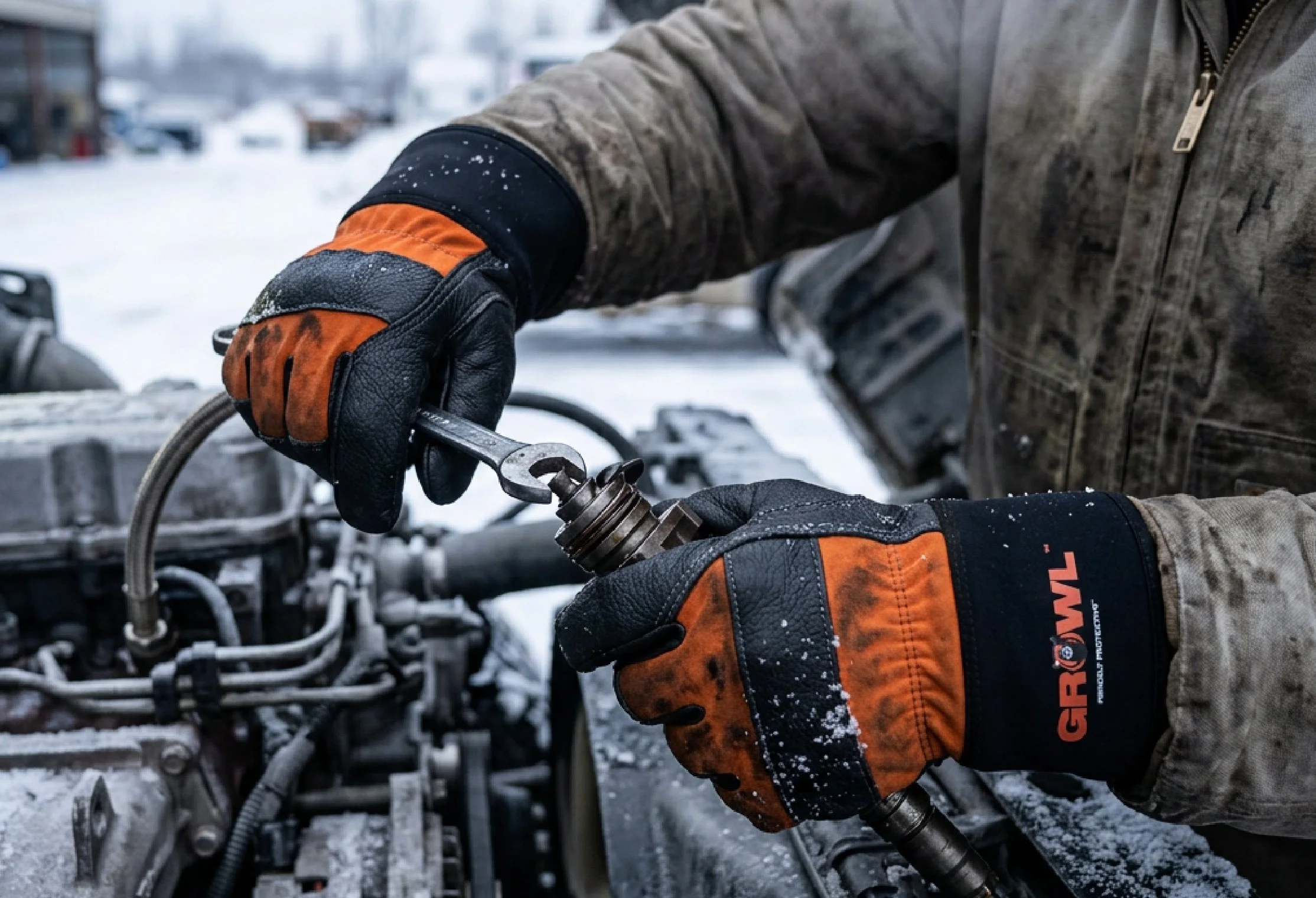
Cold doesn't just make your hands hurt. It makes them slow. Stiff fingers fumble bolts, drop sockets, and lose feel for torque long before frostbite is anywhere near the conversation.
Most winter gloves fail for the same reason. They're built for warmth first and everything else second. That trade off falls apart on a pre-trip in an open yard, where you need insulation and grip and feel at the same time, for as long as the job takes.
Cold Cuts Dexterity Before It Cuts Skin
Hand performance drops off well before a worker feels anything worth mentioning. Research published in Physiological Reports in 2025 pinned the threshold at roughly 22.9°C at the fingers and 24.9°C across the hand. Both sit well above freezing. A mechanic who says his hands are fine is already slower than he was an hour ago.
Worse for anyone cycling between a heated cab and a frozen lot: after rewarming, that threshold shifted up to about 25.7°C. Once your hands have been cold, they quit sooner the next time.
Frostbite doesn't wait for a deep freeze either. OSHA warns frostbite can happen above freezing once wind chill is factored in. At 4°C with a 35 mph wind, exposed skin feels -2°C. The thermometer isn't telling you the whole story on an open lot.
Insulation Without the Bulk
The fix isn't more padding. It's better lining.
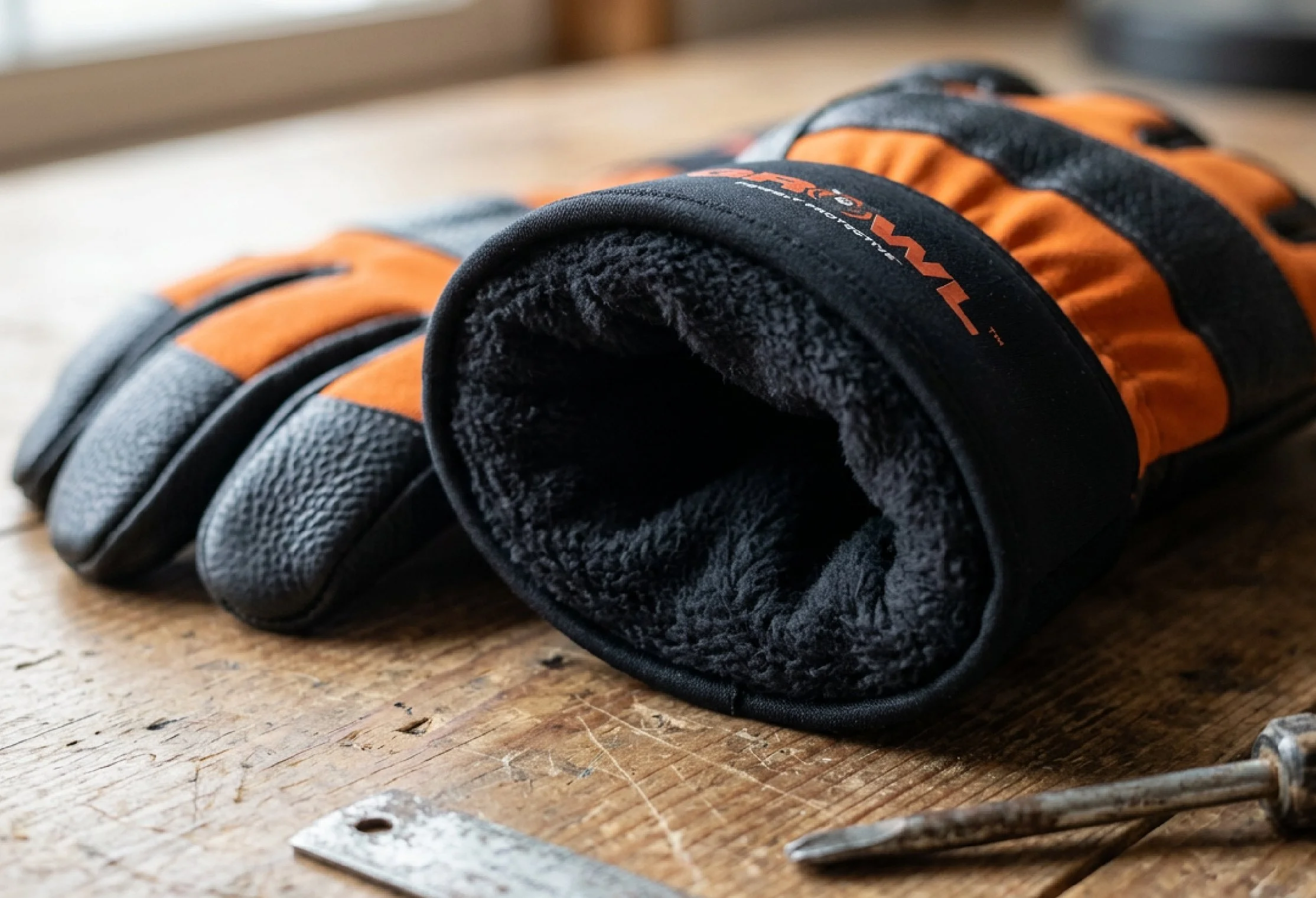
No glove generates heat. A lining works by trapping the heat your hand already makes inside pockets of still air, which means loft does the work, not thickness. Sherpa is a high pile knit with a dense curled face built to imitate wool, and it holds far more air against the skin than a flat fleece liner does. It also stays flexible when it's cold, which matters more than raw bulk when you're threading a fitting or gripping a ratchet.
A keystone thumb carries that flexibility through the joint you use most. A stiff thumb panel is what turns a warm glove into a glove nobody wears.
One Snowflake or Two
GROWL's lined gloves carry a snowflake mark in the orange shield. It tells you how long the glove keeps working outside.
One snowflake reads THERMAL LINED · COLD PROTECTION. Most of these are fleece lined, built for cool to cold conditions and in and out work where you're never outside for more than a stretch at a time. Shoulder season mornings, refrigerated docks, a bay with the door open.
Two snowflakes reads EXTRA THERMAL LINED · EXTREME COLD PROTECTION. Sustained sub freezing exposure, outdoors, start to finish. This is the mark you look for when the job takes as long as it takes and there's no warm room to duck into.
The ClawSKINZ Top Grain Cowhide Sherpa Lined Work Gloves carry two snowflakes. That's the difference between a glove that gets you through a cold morning and one that gets you through a cold shift.
Where It Earns Its Keep
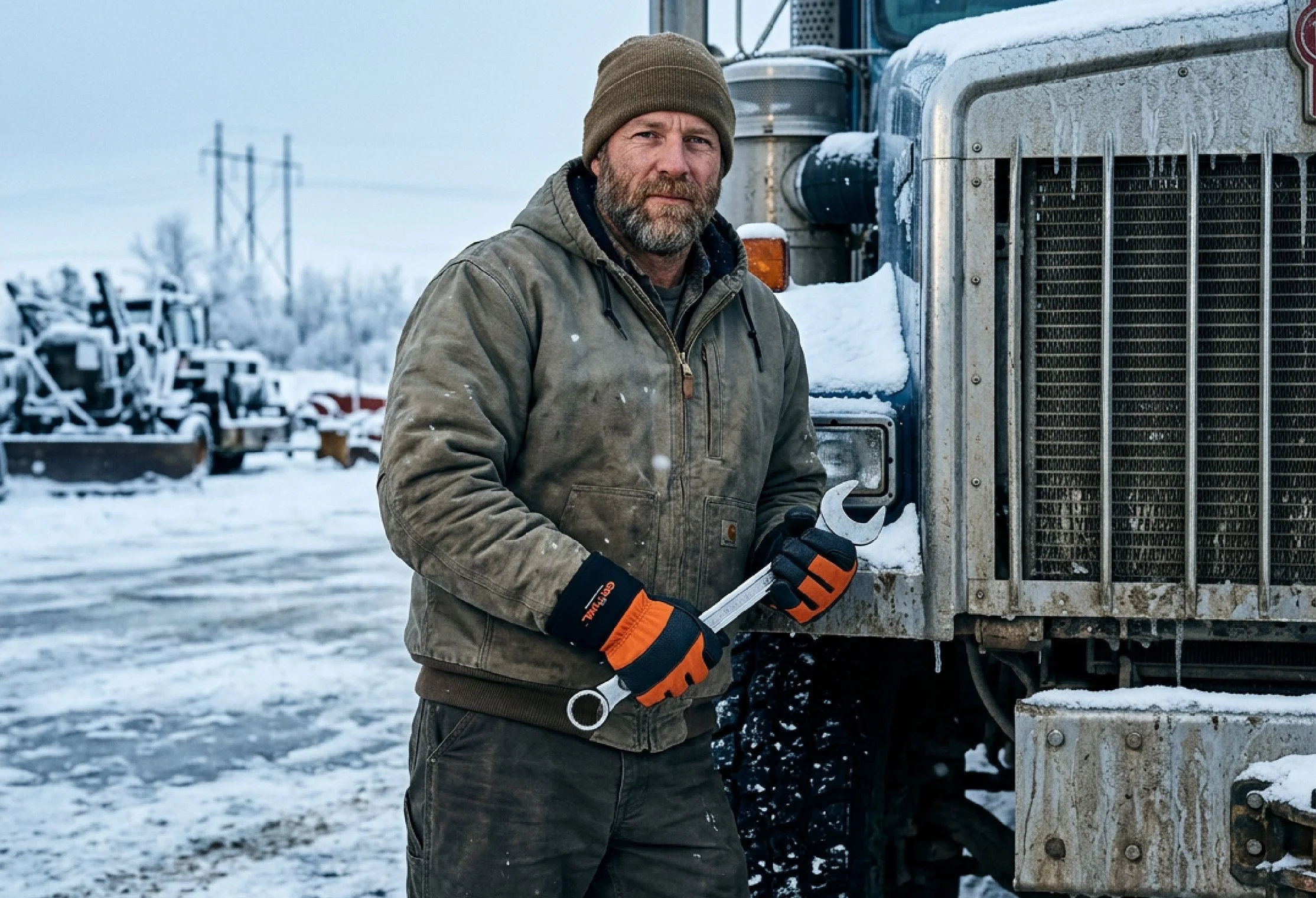
Two snowflakes is what you want for connecting glad hands on a frozen tractor unit. Checking slack adjusters on a January pre-trip. Chaining up. Changing a steer tire on a shoulder in a crosswind. Tarping and strapping a flatbed. Working a reefer unit or a cold storage dock where the temperature never comes up all shift.
The shell is Top Grain Cowhide, the outer layer of the hide and the densest, most abrasion resistant part of it. Cold work means chain, rope, steel, and strapping, and those are exactly what shreds a cheap glove at the palm. The safety cuff keeps snow and grit out and lets you strip them off fast when you need bare hands for thirty seconds.
How to Spec Them
Black/Orange, sizes M through XXL, packed 6 PR/PK and 72 PR/CS.
Size Reorder Code
M GR-045024
L GR-045025
XL GR-045026
XXL GR-045027
Cold weather stock belongs on the shelf before the weather turns, not after the first callout. If your crew works outside past October, ask your GROWL dealer about the Sherpa Lined build, or find a dealer near you at growlproducts.com.
FAQ
What is the difference between sherpa lined and fleece lined work gloves?
Sherpa is a high pile wool style lining that traps more still air against the hand, so it holds body heat longer in sustained cold. Fleece is flat and low pile, trading insulation for a slimmer profile and better feel. Sherpa for long outdoor exposure, fleece for cool conditions and in and out work.
At what temperature do you need insulated work gloves?
Sooner than most people assume. Hand dexterity measurably declines once finger skin temperature falls to roughly 22.9°C, and OSHA notes frostbite can occur above freezing once wind chill is factored in. Any sustained outdoor work below about 10°C warrants an insulated glove.
Are leather gloves warm enough for winter?
Unlined leather blocks wind and abrasion but does not insulate. Top Grain Cowhide with a sherpa lining gives you the wind block and abrasion resistance of the leather plus the insulation of a high loft liner.
What do the snowflake symbols on GROWL gloves mean?
One snowflake is thermal lined, rated for cold protection. Two snowflakes is extra thermal lined, rated for extreme cold protection. No snowflake means unlined.