How to Talk to a Procurement Manager About PPE and Actually Get the Order
A mechanic may say, "I need better grip." A welder may say, "These gloves burn out too fast." A warehouse worker says the glove is too bulky. A safety manager focuses on matching protection to the hazard. But a procurement manager is thinking about a much bigger picture: can this supplier help us buy the right PPE consistently, document the decision, control cost, reduce risk, and avoid last-minute product problems?
That's the conversation dealers need to understand. When talking to procurement about PPE compliance, the goal isn't to scare them or bury them in technical language. The goal is to show that you understand how PPE decisions are actually made: by hazard, by task, by documentation, by consistency, and by total value.
Start With the Risk, Not the Product
The biggest mistake in a PPE compliance conversation is starting with the glove.
Procurement doesn't want a random product pitch. They want to know whether the product fits the work environment and supports the company's safety process. A better opening question is: "What hand hazards are your workers exposed to most often?"
That language matters. OSHA's hand protection standard says employers must select and require appropriate hand protection when workers' hands are exposed to hazards such as harmful substance absorption, severe cuts or lacerations, abrasions, punctures, chemical burns, thermal burns, and harmful temperature extremes — with selection based on the glove's performance characteristics relative to the task, conditions, duration of use, and hazards present.
PPE compliance starts with hazard matching. Not price, not brand, not "what glove do you usually buy?"
What Procurement Managers Actually Care About
Procurement managers care about more than unit cost, and dealers who understand that have a real advantage.
They're responsible for keeping supply organized, reliable, and defensible. When it comes to PPE, they typically care about correct product selection, supplier reliability, cost control, standardization across teams or locations, and reduced emergency purchases.
So instead of saying "this glove is better," say: "this helps standardize the right glove for the right task." That's a procurement-friendly message, and it lands differently.
Talk in Terms of a PPE Program
Compliance is not just a product issue. It's a program issue.
CCOHS explains that an effective PPE strategy should identify hazards, conduct risk assessments, consider control methods using the hierarchy of controls, integrate approaches, and evaluate controls to make sure hazards remain controlled. That's why a stronger dealer conversation sounds like: "We can help you organize hand protection by task category, so procurement, safety, and end users are all working from the same product logic."
That's much stronger than saying "we have nitrile gloves, cut gloves, and welding gloves." Procurement wants structure. Give them structure.
The Compliance Conversation Framework
Here's a simple way dealers can talk to procurement managers.
1. Identify the task. Ask: "Which jobs or departments are we buying PPE for?" Examples include automotive repair, fleet maintenance, welding, fabrication, warehousing, assembly, metal handling, and maintenance. This helps avoid one-glove-fits-all buying, which is where most PPE programs quietly fall apart.
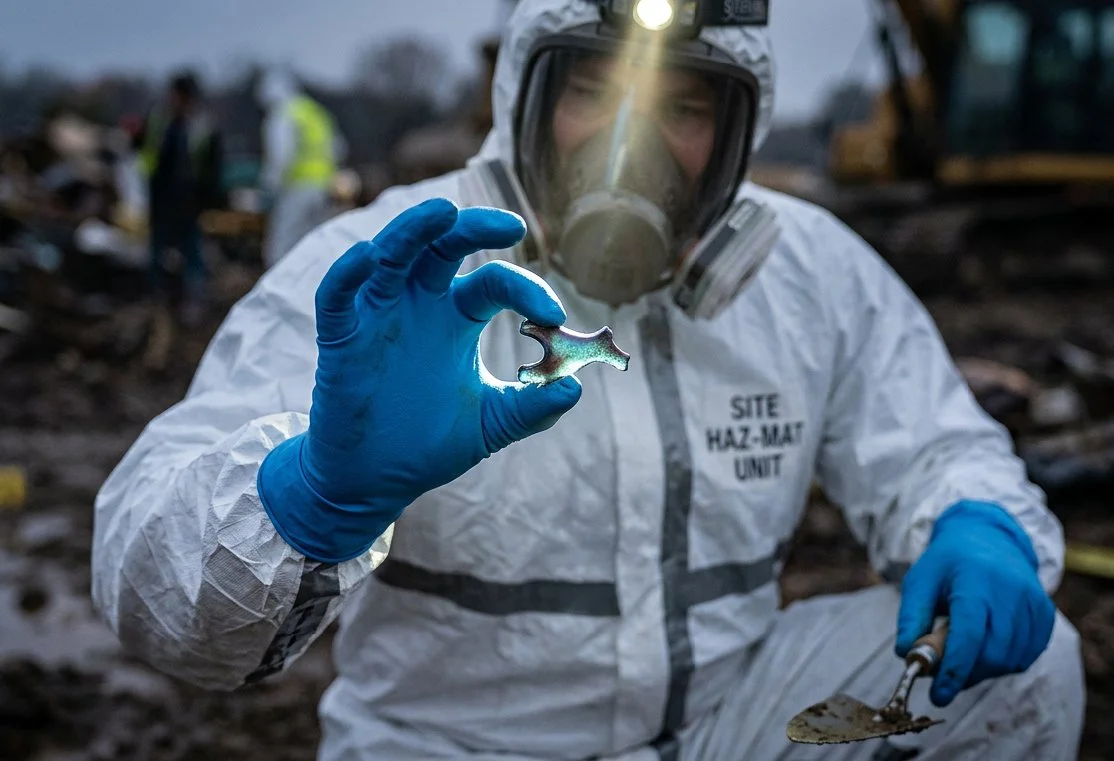
2. Identify the hazard. Ask: "What are workers actually exposed to during those tasks?" Examples: oil and grease, cuts and sharp edges, abrasion, heat and sparks, and contaminated surfaces. This is where the glove recommendation becomes more defensible.
3. Match the PPE to the hazard. Then explain: "Once we know the task and hazard, we match the glove to the application." For Growl, that means GrowlTECH for everyday disposable nitrile use, GrowlGRRRIP for oily and greasy high-grip disposable tasks, ClawFORCE for reusable handling and grip, ClawGUARD for cut-resistant industrial environments, ClawFORGE for welding and heat-related shop work, and GrowlTOWEL for cleanup, glove wiping, tools, hands, and workstations.
4. Support consistency. Procurement doesn't want every department buying random gloves. Say: "The goal is to reduce random substitutions and give each job category a clear approved product."
5. Build the reorder system. Ask: "Which products need to be stocked every month, and which are task-specific?" This separates high-velocity consumables from specialty items and turns a glove purchase into a managed program.
How to Position Cost Without Sounding Cheap
Procurement managers care about cost. But cost isn't always the same as price.
The wrong glove can increase total cost through excessive glove changes, poor durability, worker complaints, and too many suppliers creating inconsistent inventory. So instead of leading with "this glove is cheaper," lead with: "this program helps reduce waste, standardize ordering, and match the glove to the work."
For example, if workers change gloves too often because the surface is dirty, a stay-wet towel like GrowlTOWEL may help reduce unnecessary glove changes when the glove is still intact and appropriate for the task. That gives procurement a concrete value story: the right product pairing can reduce waste and improve usage efficiency.
The Documentation Angle
Procurement teams often need clear product information before they approve PPE. They may ask for product specifications, material information, cut level or performance ratings, case quantities, sizing options, and availability and lead times.
Dealers should make this easy. A procurement manager is more likely to trust a supplier who can provide clear, organized product information than one who only talks in broad claims like "heavy duty" or "industrial grade."
The better message: "We can provide the product details your safety and purchasing teams need to approve and standardize the lineup."
Avoid Overclaiming Compliance
A glove does not make a company "compliant" by itself. Compliance depends on hazard assessment, proper selection, training, use, maintenance, replacement, and employer safety practices.
So dealers should avoid saying: "This glove makes you OSHA compliant." A better, more credible phrase: "This glove can support your PPE program when matched to the appropriate task and hazard."
OSHA also emphasizes training for PPE use — its PPE assessment materials include training workers on when hand and arm protection is necessary, what type is necessary, how to put on, take off, adjust, and wear PPE, PPE limitations, and care, maintenance, useful life, and disposal. Procurement may buy the product, but the employer still needs the right internal process in place.
Use these questions to start a stronger conversation:
Which departments are currently buying hand protection?
Are PPE products standardized across locations or purchased separately?
What hand hazards are most common in your operation?
Are workers using the same glove across tasks that require different protection?
Are glove changes happening because of failure, contamination, poor fit, or poor grip?
Are cut-resistant gloves matched to the actual cut hazard?
Are welding gloves failing at the seams, leather, or cuff?
Are workers changing nitrile gloves just because the surface is dirty?
Do purchasing and safety agree on which glove belongs to which task?
Would a one-supplier hand protection program simplify reordering?
Does procurement need product specs for approval?
These questions make the dealer sound like a partner. Not just a salesperson.
How Growl Fits the Procurement Conversation
Growl's strongest procurement story isn't one single glove. It's the ability to build a full hand protection program with one supplier.
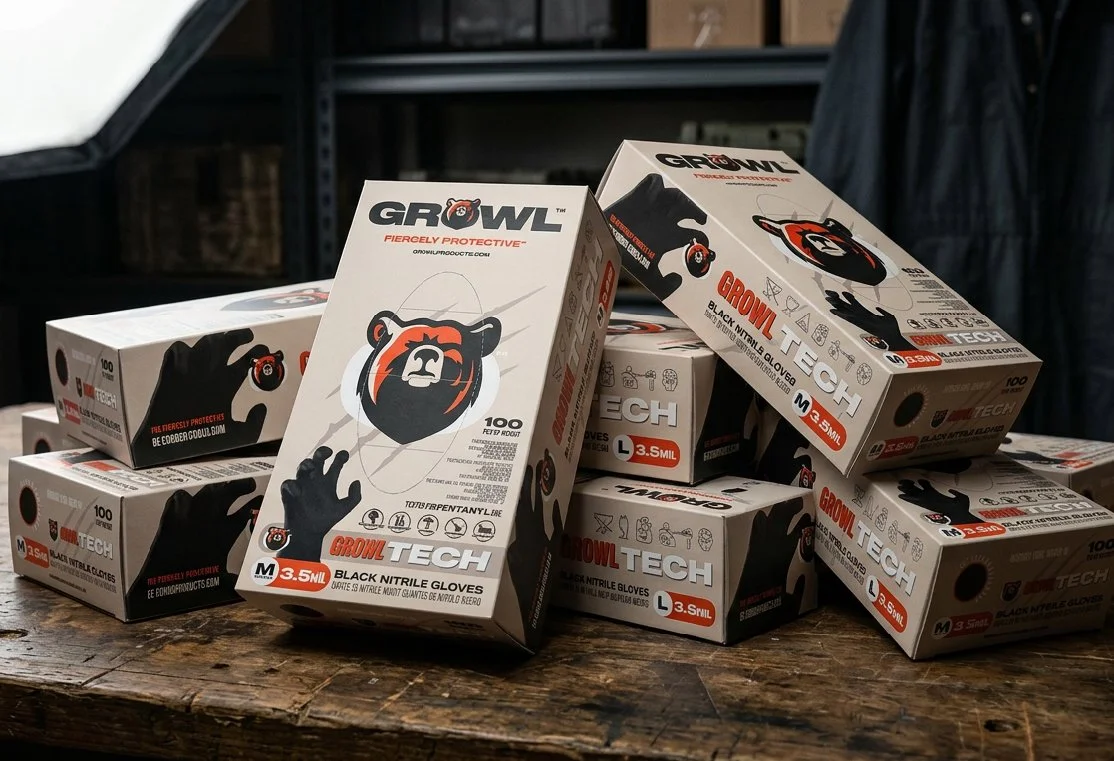
That program can include GrowlTECH for everyday industrial nitrile gloves, GrowlGRRRIP for high-grip nitrile in oily and greasy fluid-heavy tasks, ClawFORCE for reusable work gloves built for grip and durability, ClawGUARD for cut-resistant gloves in sharp-edge industrial environments, ClawFORGE for welding gloves designed for sparks, spatter, heat, and shop abuse, and GrowlTOWEL for stay-wet towels covering hands, glove surfaces, tools, and workstations.
The procurement message is simple: one supplier, one organized hand protection lineup, clearer task matching, easier reordering, better support for your PPE program.
A Simple Script Dealers Can Use
Here's a clean way to open the conversation:
"We're not here to replace one glove with another random glove. We want to help you organize hand protection by task and hazard — so your team knows which glove belongs to which job, procurement has a cleaner reorder structure, and safety has a more defensible product selection process."
Then ask: "Can we walk through the main hand hazards your workers face and identify where your current glove program may have gaps?"
That's the right tone. Consultative, compliance-aware, and procurement-friendly. And it opens the door to the full Growl lineup naturally.
The Bottom Line
When talking to procurement managers about PPE compliance, don't lead with product hype. Lead with structure.
Procurement wants clear product logic, consistent supply, documentation, cost control, and fewer surprises. Safety teams want PPE matched to the hazard. Workers want gloves that actually work for the job. A strong dealer brings those needs together and the right conversation follows a simple path: identify the task, identify the hazard, match the product, standardize the order, support the program.
That's how Growl can help dealers move from simple glove selling to full hand protection program building. Recommend a better system. Not just another box of gloves.