Cut-Resistant Gloves 101 What the Cut Level Ratings Actually Mean
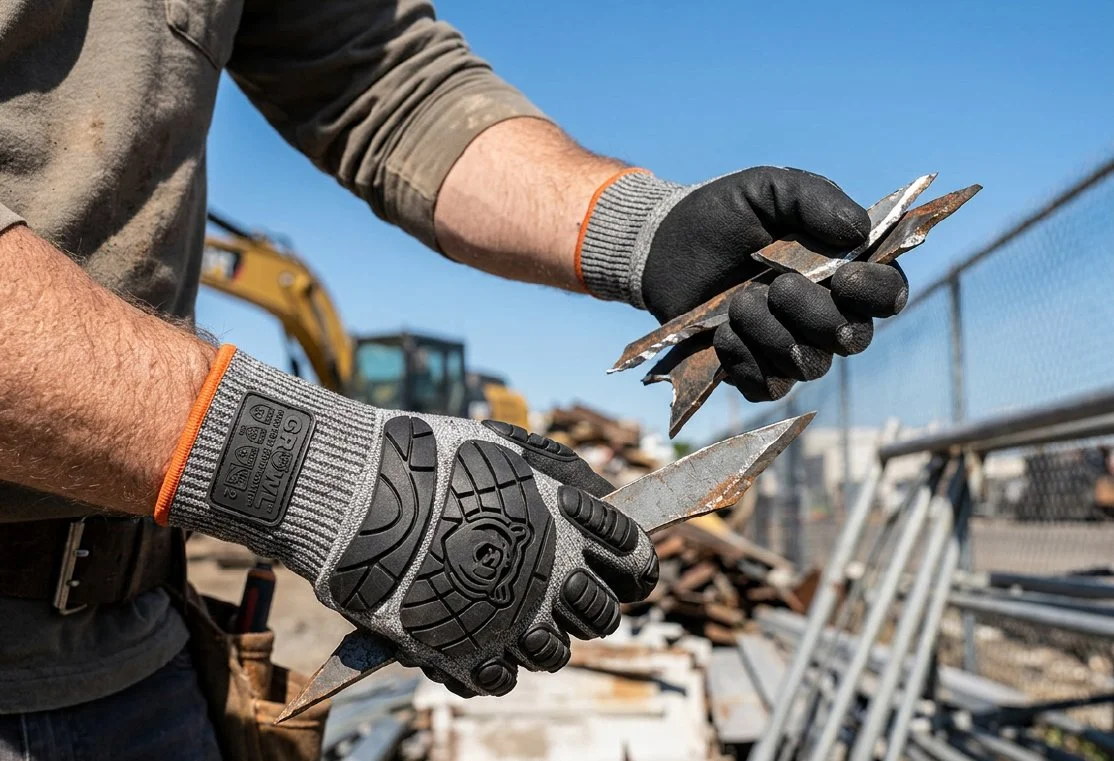
The most common mistake in cut-resistant glove selection isn't buying too little protection. It's buying the wrong protection — and not knowing why.
A customer sees A2, A4, A6, A9 on a spec sheet and assumes higher means better. That's partially true. But a worker in light assembly wearing an A9 glove can't do the job. A fabrication worker in an A2 glove is underprotected. Both outcomes are problems — and both happen because the conversation started with the number instead of the work.
For dealers, cut level ratings are an education opportunity. Customers who understand the scale buy the right glove for the actual hazard instead of guessing — and that's fewer complaints and a stronger reason to keep buying from you.
Cut-resistant is not cut-proof
Before anything else: cut-resistant gloves reduce cut risk. They don't eliminate it.
A glove can still be cut if the blade is sharp enough, the force is high enough, or the hazard exceeds the rating. The right framing for every customer conversation: cut-resistant gloves help protect against certain hazards under certain conditions. That keeps the sale honest and sets realistic expectations.
How ANSI cut levels work
ANSI/ISEA 105 is the North American standard for cut-resistant glove classification. Cut levels run from A1 to A9, each representing how much force — measured in grams — a blade needs to cut through the glove material in standardized testing. Higher number, more resistance.
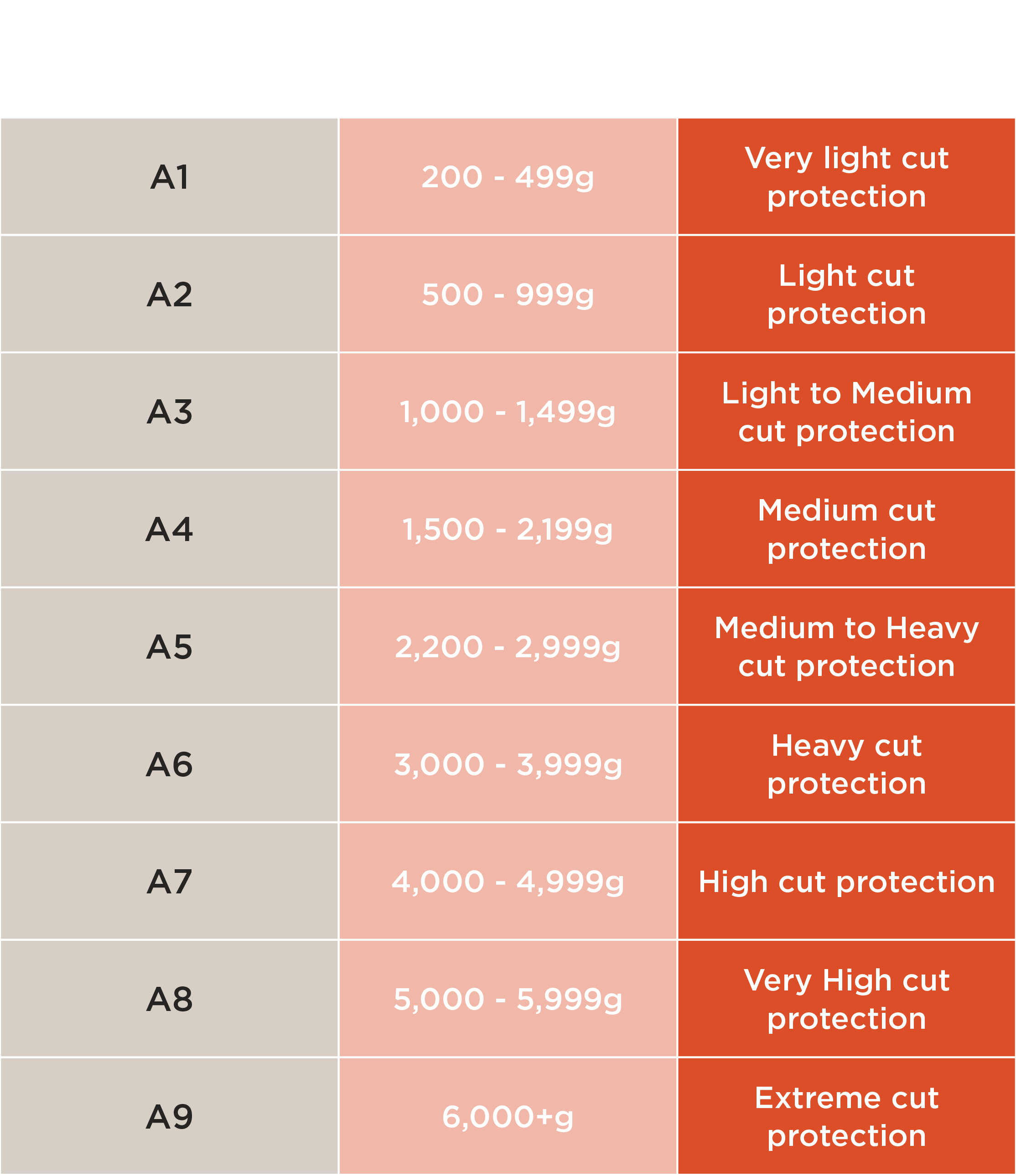
The number tells you how the glove performed in testing. It doesn't tell you whether it fits the job.
Matching cut level to the hazard
A1–A3: Light cut protection
For lower-risk tasks where workers need hand coverage and some cut resistance without serious sharp-edge exposure. Fits light assembly, packaging, general warehouse work, box handling, small parts handling, and general maintenance. Priority here is dexterity and comfort — not maximum protection.
A4–A5: Medium cut protection
The most common range for general industrial users. Fits automotive repair, maintenance work, metal part handling, glass handling, sharp plastic and packaging materials, light fabrication, and general industrial environments with moderate cut hazards. For many dealer accounts, this is where the conversation gets serious.
A6–A7: Heavy cut protection
For workers handling sharper or rougher materials where moderate protection isn't enough. Fits sheet metal handling, heavy fabrication, stamped metal parts, industrial maintenance with frequent sharp-edge exposure, metal recycling, and manufacturing environments with consistent cut risk. At this level, customers usually already know they have a problem.
A8–A9: Very high to extreme cut protection
Not a general-purpose range. For environments where workers face severe cut exposure that lower ratings can't handle — high-risk metal handling, heavy steel work, industrial blade exposure, glass manufacturing, sharp scrap, and severe-hazard fabrication. A9 is the ceiling, not the default.
Why the highest rating isn't always right
Higher cut levels use stronger, more engineered materials — and depending on the glove design, that affects flexibility, hand feel, breathability, and cost. A glove that's too bulky or uncomfortable for the task gets pulled off. A glove sitting on the workbench doesn't protect anyone.
The goal isn't to sell the highest rating available. It's to match the rating to the actual hazard.
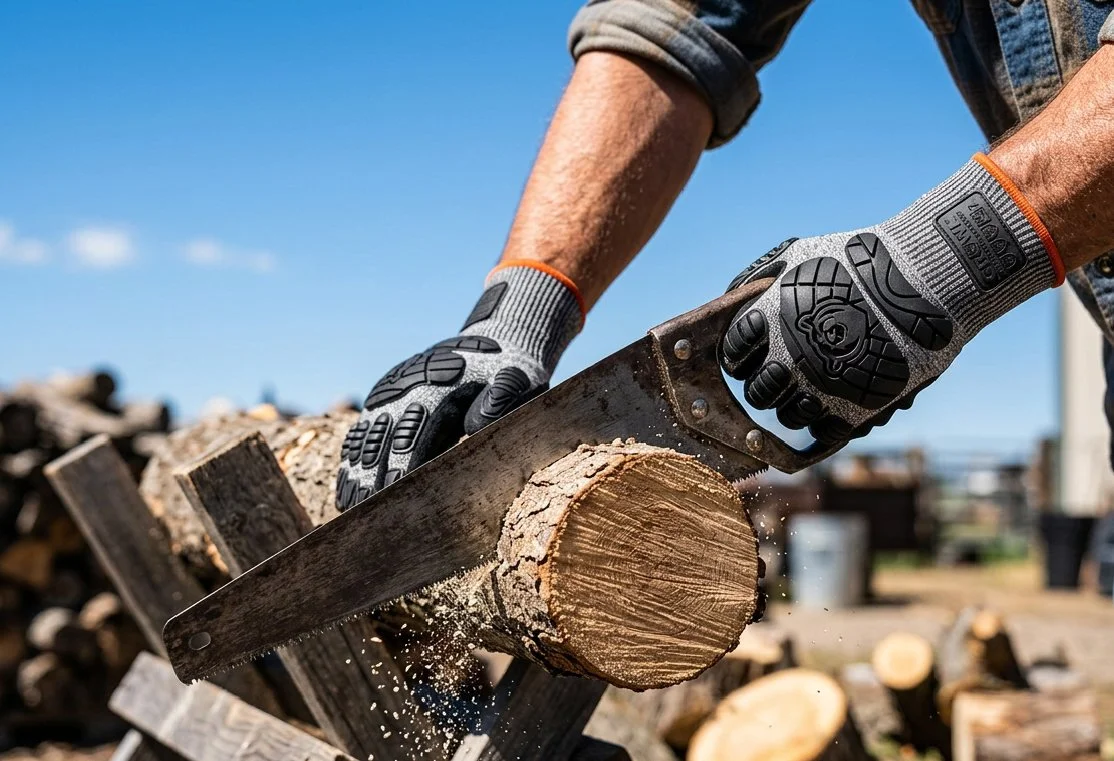
Cut level is only part of the story
A glove can have the right cut rating and still be wrong for the job. Before finalizing any recommendation, confirm:
Grip — Is the work dry, wet, oily, or dusty? Sandy nitrile, foam nitrile, latex, and polyurethane coatings perform differently depending on the surface.
Dexterity — Can workers still handle parts, tools, and fasteners with the glove on? If not, it's too heavy for the task.
Abrasion — Some jobs wear palms down before cutting through the liner. If palms fail first, abrasion resistance matters as much as cut rating.
Puncture — Cut resistance is not puncture resistance. Wire ends, splinters, and pointed metal are a different hazard.
Impact — Back-of-hand hazards need impact protection in addition to cut resistance.
Don't sell cut level alone. Sell the glove based on the full job.
Where ClawGUARD fits
ClawGUARD is built for industrial users who need practical cut protection matched to the actual work environment — from warehouse and automotive to fabrication and sheet metal handling. For dealers, ClawGUARD covers the mid-to-heavy protection range with coatings and construction suited for real industrial conditions.
The strongest ClawGUARD conversation follows the same framework as this post: start with the environment, match the cut level, confirm the grip and fit. A properly recommended glove is one workers will actually wear.
Four questions that make the sale easier
When a customer asks for cut-resistant gloves, ask:
What are workers handling — and are the edges sharp, rough, jagged, or unpredictable?
Where are cuts or glove failures happening right now?
Do workers need more dexterity or more protection — and is the current glove getting pulled off during tasks?
Is cut the only hazard, or do puncture, abrasion, impact, or grip also factor in?
Those questions move the conversation from "what cut level?" to "what glove actually fits the work?" — which is where dealers add real value.
The bottom line
Cut level ratings aren't complicated once customers understand what they mean.
ANSI/ISEA runs from A1 to A9 — higher numbers mean more resistance to cutting force in standardized testing. But the number is a starting point, not the answer. The right glove depends on the task, the material, the edge type, the environment, and whether workers will actually wear it through a full shift.
Don't ask customers what cut level they want. Ask what they're cutting their hands on. That's how you move from selling gloves to solving the hazard.